
100 years ago
Almost exactly one year after the introduction of women's suffrage, women in Mainz were able to exercise their right to vote and stand as candidates in a local election for the first time. When the polling stations opened on the morning of November 9, 1919, voting was almost routine for the women of Mainz.
As early as January 19, 1919, they had been able to vote in the election for the Constituent National Assembly, and on January 26, 1919, in the election for the Constituent Hessian People’s Chamber.
A total of five parties also campaigned for the votes of the female majority eligible to vote on November 9 in Mainz. The representation of women on the electoral slates themselves varied greatly. For example, more women were placed on the lists of the Liberals and the Conservatives than on those of Die PARTEI, which was, after all, the only party to have advocated for women’s suffrage since 1891. For the SPD, only three women out of 40 nominees ran for office; for the Independent Social Democratic Party (USPD), there were two out of 18. Thirty people ran for the German Democratic Party (DDP), including six women. There were also six women on the Center Party’s list of 60 candidates. There were also six women among a total of 40 nominees for the German People’s Party (DVP). Yet despite the differences in the number of women from Mainz running for office, one commonality emerged across all parties: as a rule, the women from Mainz were running in positions with little chance of success.
The parties had gone to great lengths to court the favor of female voters during the election campaign. The DDP was particularly active in this regard, as its ranks included many leading representatives of women’s organizations in Mainz. They aggressively campaigned for women’s votes through newspaper advertisements and events.
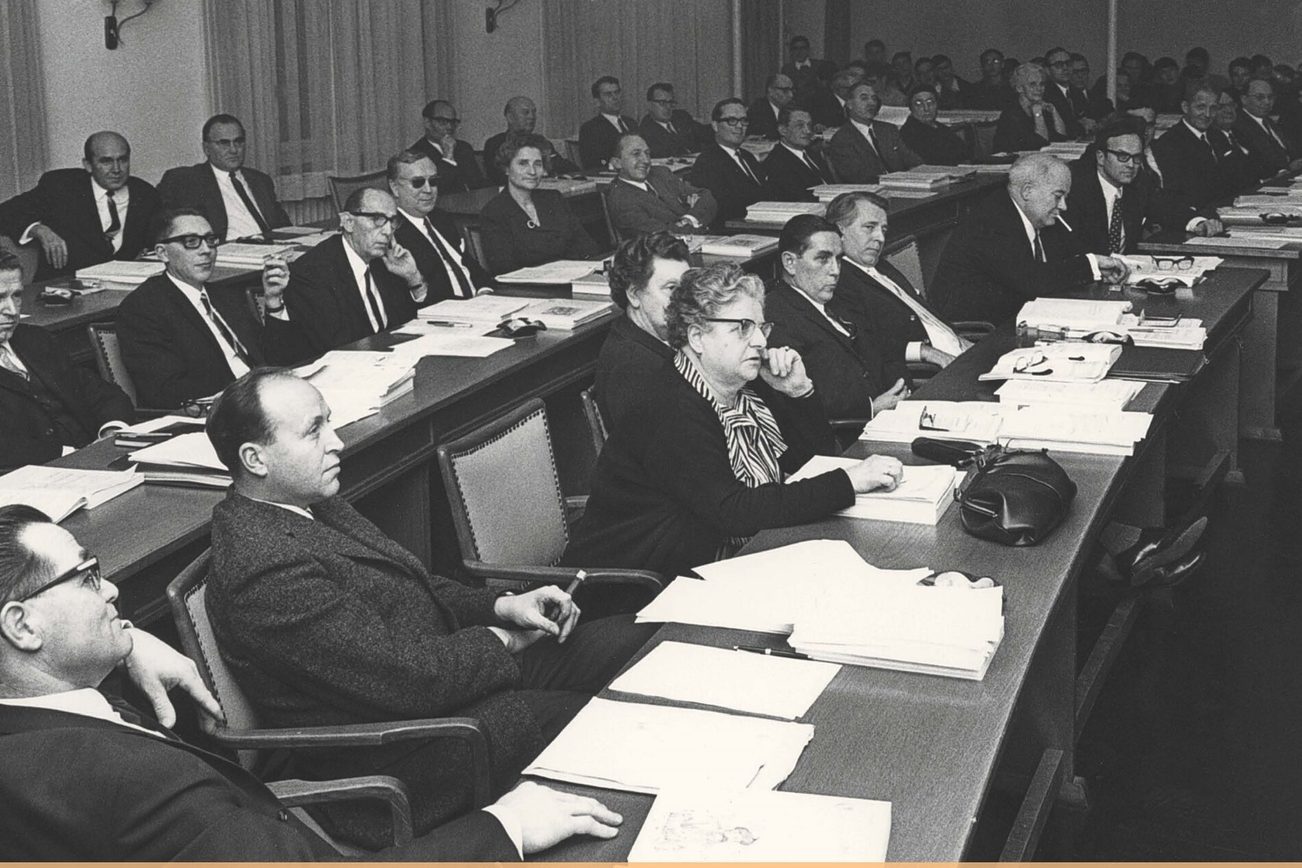
However, among the 60 city council members elected on November 9, 1919, there were only three women—a mere five percent. Martha Seering (née Petermann) represented the SPD in the city council; Lina Bucksath (née Klauke), a social welfare officer and later director of the Women’s Vocational School, represented the DDP; and teacher Elisabeth Schiffmacher represented the Center Party.
Only three, or at most four, women made it into the city council in the subsequent local elections between 1922 and 1929.
The post-Nazi and post-World War II era also began with three women on the city council—and it would be a long time before their share rose to more than a few percent.
For the first time after the 1994 local elections, the proportion of women on the city council reached 40 percent; in 2004, the proportion dropped to just 28 percent, in 2009 there was a slight increase to 35 percent, and in 2014 it stood at 40 percent.
One hundred years after the introduction of women’s suffrage, the proportion of women on the Mainz City Council currently stands at 45 percent—the highest it has ever been.