Museums up to date
Here you will find an overview of the museums in Mainz and current dates for exhibitions and events.
The Mainz museums
Gutenberg Museum
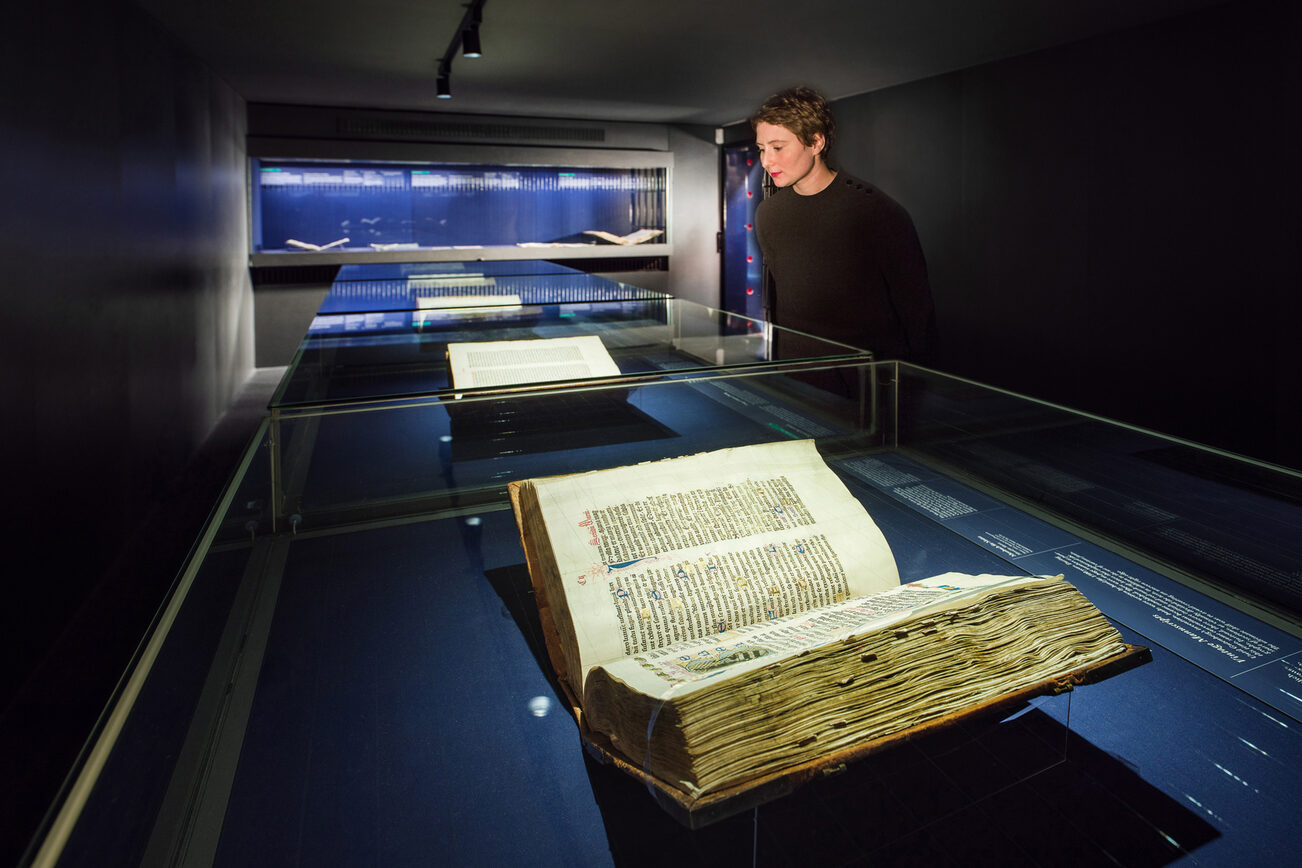
Experience the history of printing, books, and writing "live": one of the oldest printing museums in the world is located in the center of Mainz's old town, opposite the cathedral. Founded in 1900 by citizens of Mainz, the Gutenberg Museum is dedicated to Johannes Gutenberg, the "man of the millennium," his inventions, and their impact on the present day in special exhibitions.
Gutenberg Museum MOVED
The new exhibition "Gutenberg Museum MOVED" opened on November 22, 2024, and will be located in the left wing of the Natural History Museum during the construction phase. The new Gutenberg Museum building, Mainz's project of the century, is gaining momentum. The reopening in the Natural History Museum marks an important milestone in the construction planning.
Contact us
Address
Gutenberg-Museum
Reichklarastraße 1
55116 Mainz
Telephone, fax and e-mail address
Your way to us
Map
Natural History Museum
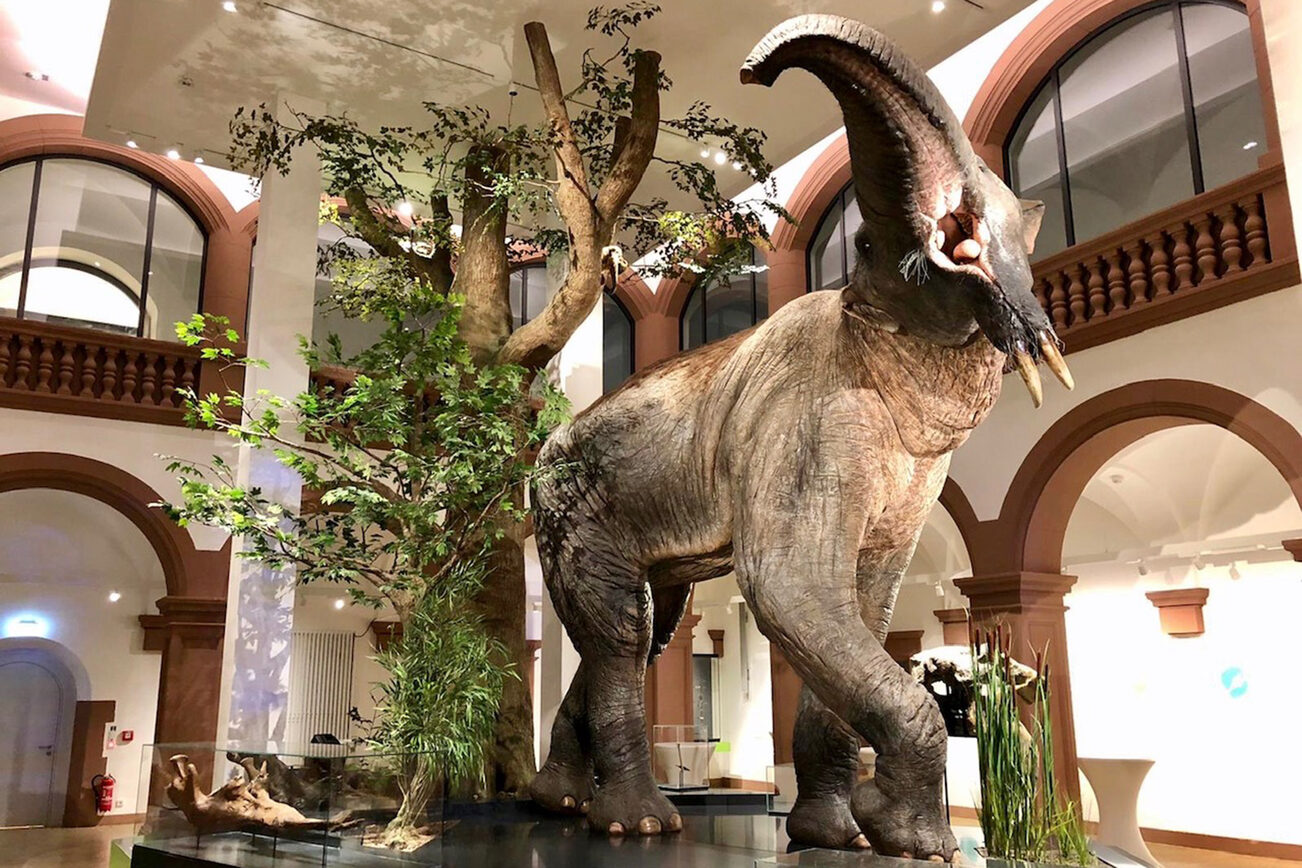
As a showcase for the natural areas of Rhineland-Palatinate, the Natural History Museum in Mainz is the largest natural history museum of its kind in Rhineland-Palatinate. Visitors embark on a primeval journey to the "Wild Worlds" of the ancient Rhine millions of years ago and experience the flora and fauna that lived there. The permanent exhibition of the nhms ranges from the Deinotherium gigantuem, which welcomes guests in the museum foyer, to the woolly rhinoceros.
Contact us
Address
Naturhistorisches Museum
Reichklarastraße 1
55116 Mainz
Telephone, fax and e-mail address
Your way to us
Map
Mainz State Museum
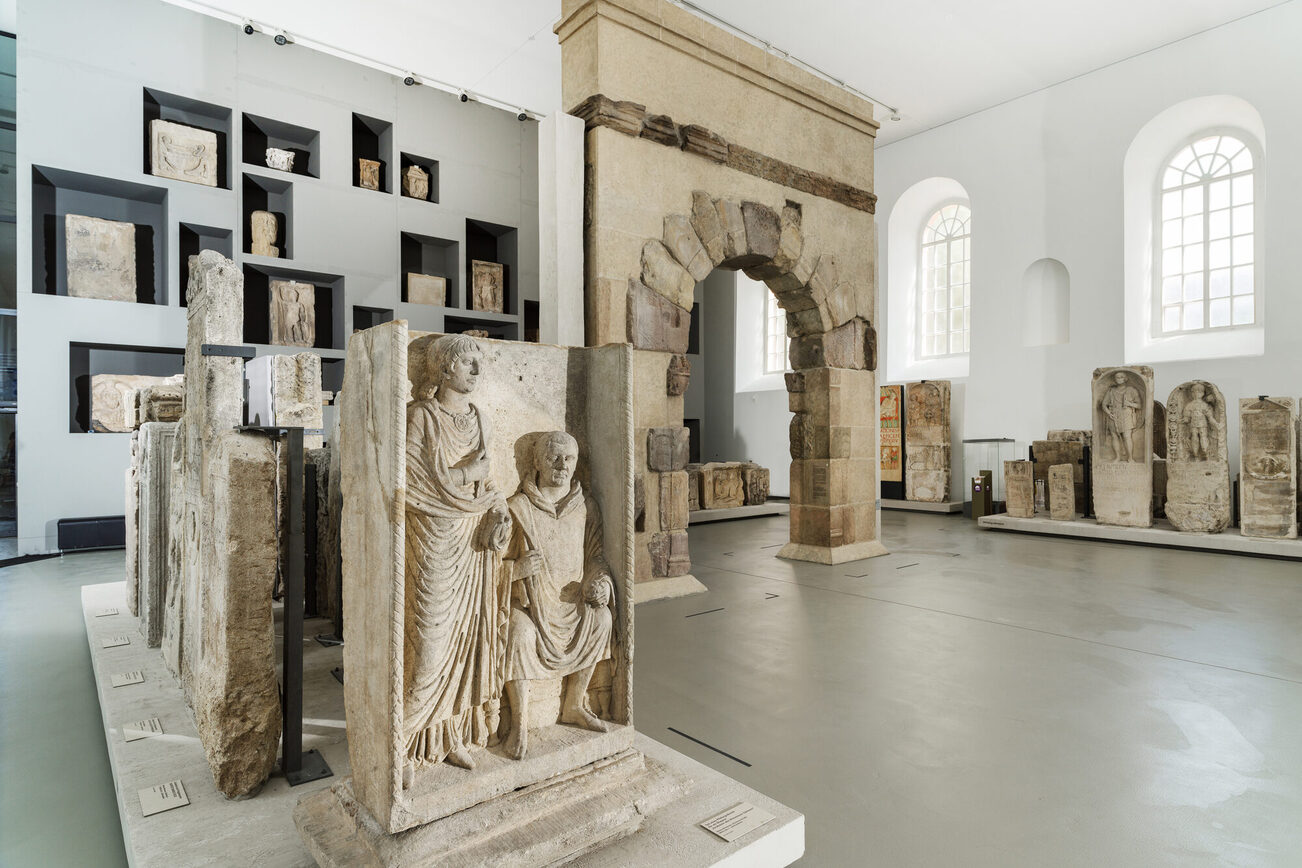
The Mainz State Museum is one of the oldest museums in Germany. The baroque "Golden-Ross-Kaserne" and the modern glass and steel construction in the inner courtyard, together with the electoral stables, form the charming ensemble of the completely barrier-free State Museum.
The important art and cultural history collection spans from the beginnings of culture to contemporary art.
Contact us
Address
Landesmuseum Mainz
Große Bleiche 49
55116 Mainz
Telephone, fax and e-mail address
Your way to us
Map
Leibniz Center for Archaeology - LEIZA
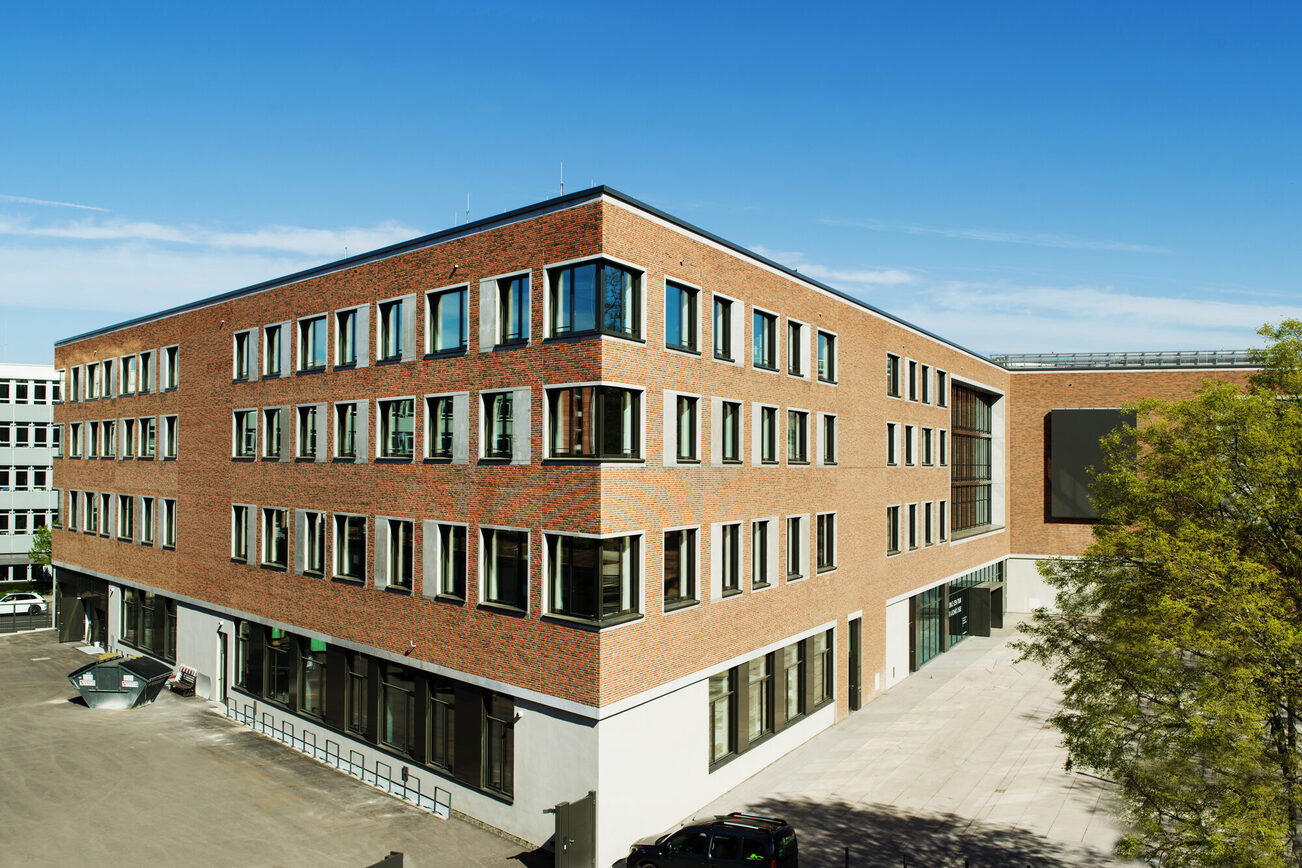
As a Leibniz research institute and museum for archaeology, LEIZA studies humans and their development based on material remains from three million years across time and space.
The fundamental insights gained from this research contribute to a better understanding of human behavior and actions and the development of societies. In this way, LEIZA enriches our knowledge of humankind from an archaeological perspective and creates an essential foundation for reflecting on the present and shaping the future. Through archaeology, LEIZA understands humankind in context and shares its findings in international dialogue. LEIZA is active worldwide and has so far conducted successful and comprehensive research in various regions of Africa, Asia, and Europe. The unique concentration of archaeological, scientific, restoration, and information technology expertise, combined with important workshops, laboratories, and archives, allows it to conduct object-oriented research on the archaeology of the Old World (Asia, Africa, Europe) from the beginnings of human history to modern times. As one of eight research museums of the Leibniz Association, LEIZA combines excellent science with exhibitions and, with its educational mission, is also a place of dialogue with the public.
Until its renaming on January 1, 2023, LEIZA was known internationally as the Roman-Germanic Central Museum (RGZM) and was founded in Mainz in 1852 by resolution of the German historical and antiquarian societies. Since 2024, LEIZA has been represented at a total of four locations in Germany: Mainz, Neuwied, Mayen, and Schleswig.
Contact us
Address
Leibniz-Zentrum für Archäologie - LEIZA
Ludwig-Lindenschmit-Forum 1
55116 Mainz
Telephone, fax and e-mail address
Your way to us
Map
Museum of Ancient Navigation
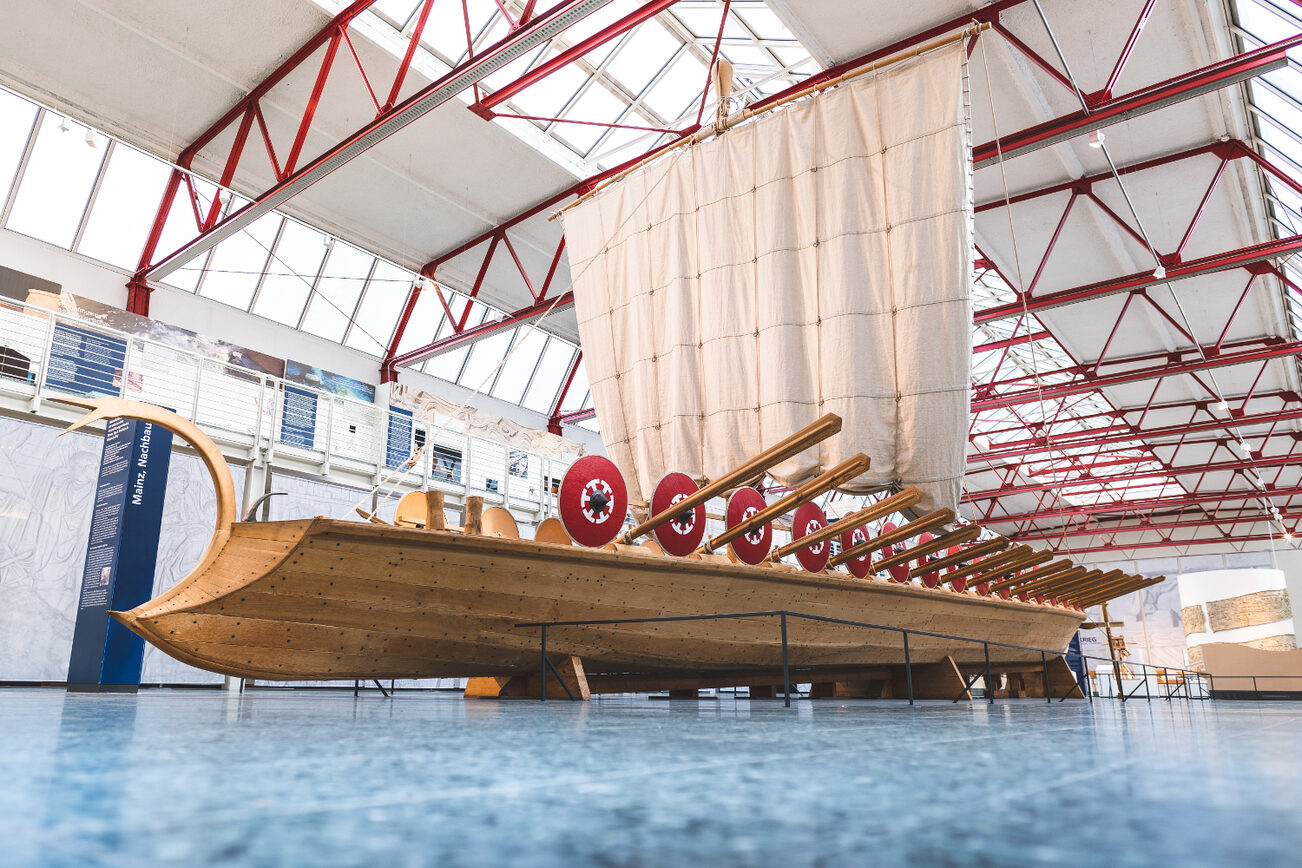
How globalized was the ancient world? Why have people been on the move for thousands of years? What did they use to set sail? And what can we learn from this for today? These are all questions addressed by the Museum of Ancient Seafaring in Mainz, which will reopen its doors in late fall 2026 after extensive renovations. The museum, part of the Leibniz Center for Archaeology (LEIZA), will present itself with a modern exhibition concept, new media stations, and fresh perspectives on the history of globalization and mobility.
Contact us
Address
Museum für Antike Schifffahrt
Neutorstraße 2 B
55116 Mainz
Telephone, fax and e-mail address
Your way to us
Map
Mainz Carnival Museum and Carnival Archive
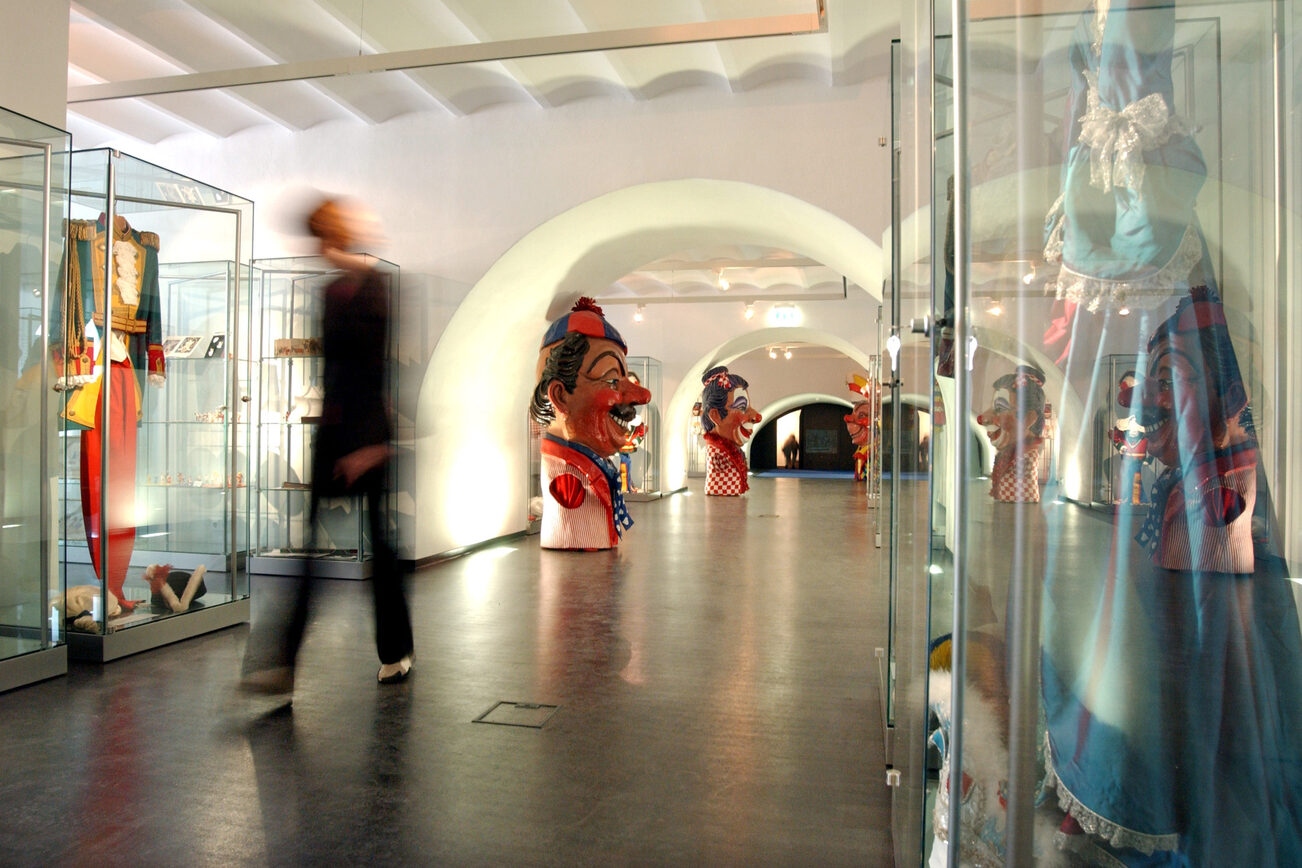
Who actually composed "Humba, Humba, Tätärä"? You can find the answer at the Carnival Museum!
Since its opening in 2004, the Mainz Carnival Museum has been inviting visitors on a colorful journey through the history of "Meenzer Fassenacht" – from 1837 to the present day. The exhibition features numerous original exhibits such as medals, jester's caps, scepters, guard uniforms, historical posters, texts, songbooks, and photographs. The collection is complemented by an impressive selection of video documents that bring Mainz Carnival to life.
The museum emerged from the Mainz Carnival Archive, which was founded in 1972. The museum is run on a voluntary basis by the non-profit "Förderverein Mainzer Fastnachtsmuseum" (Friends of the Mainz Carnival Museum). In addition to its own exhibits, the museum draws on the archive's collection for its exhibitions. Together, the two institutions have over 25,000 archival items.
Contact us
Address
Mainzer Fastnachtsmuseum und Fastnachtsarchiv
Kaiserstraße 76
55116 Mainz
Telephone, fax and e-mail address
Your way to us
Map
Cathedral and Diocesan Museum
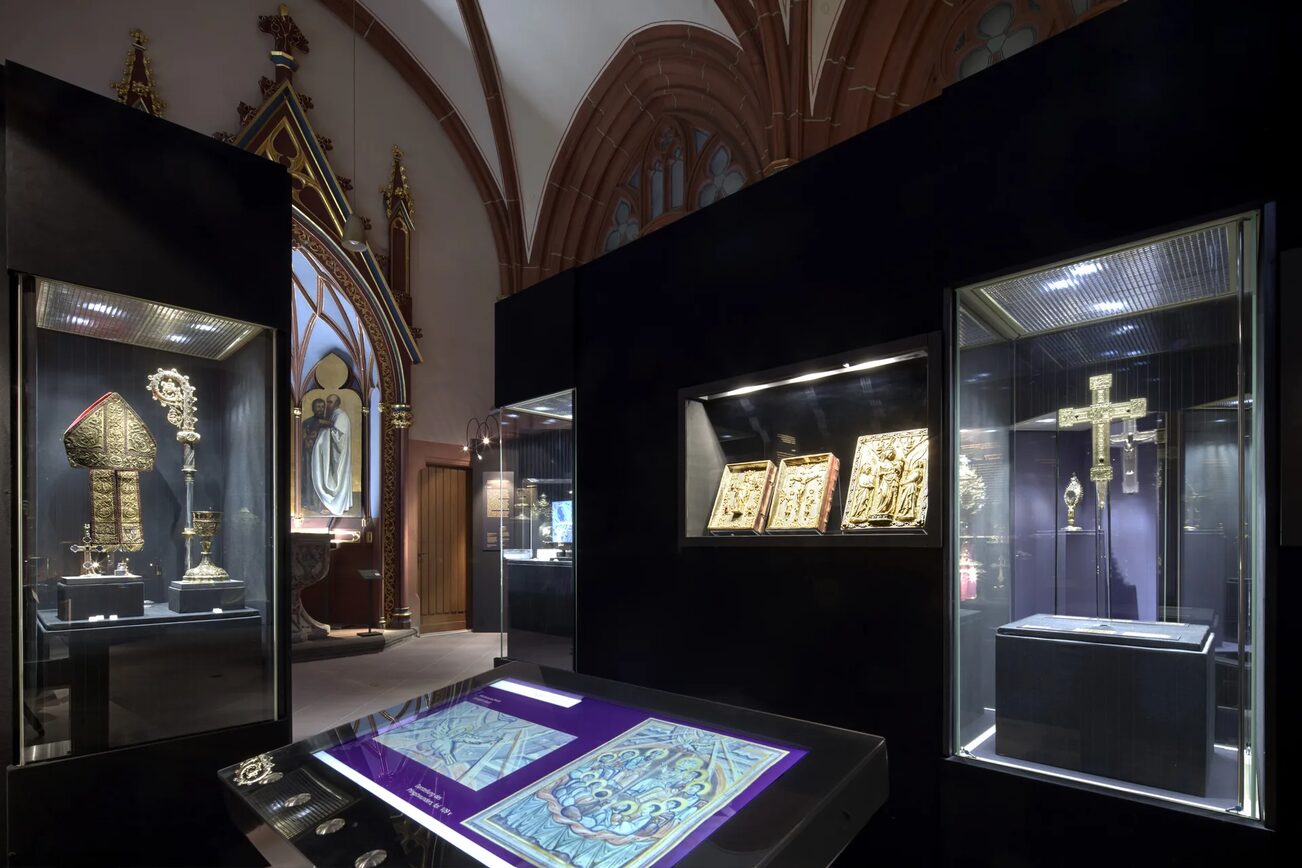
In rooms steeped in history, the Cathedral Museum—the second largest of its kind in Germany—presents sacred art from late antiquity to the present day. Highlights include the unique collection of early Gothic stone sculptures and the treasure chamber of Mainz Cathedral. Special exhibitions are held regularly to complement the permanent collection.
Contact us
Address
Dom- und Diözesanmuseum
Domstraße 3
55116 Mainz
Telephone, fax and e-mail address
Your way to us
Map
Shrine of Isis and Mater Magna
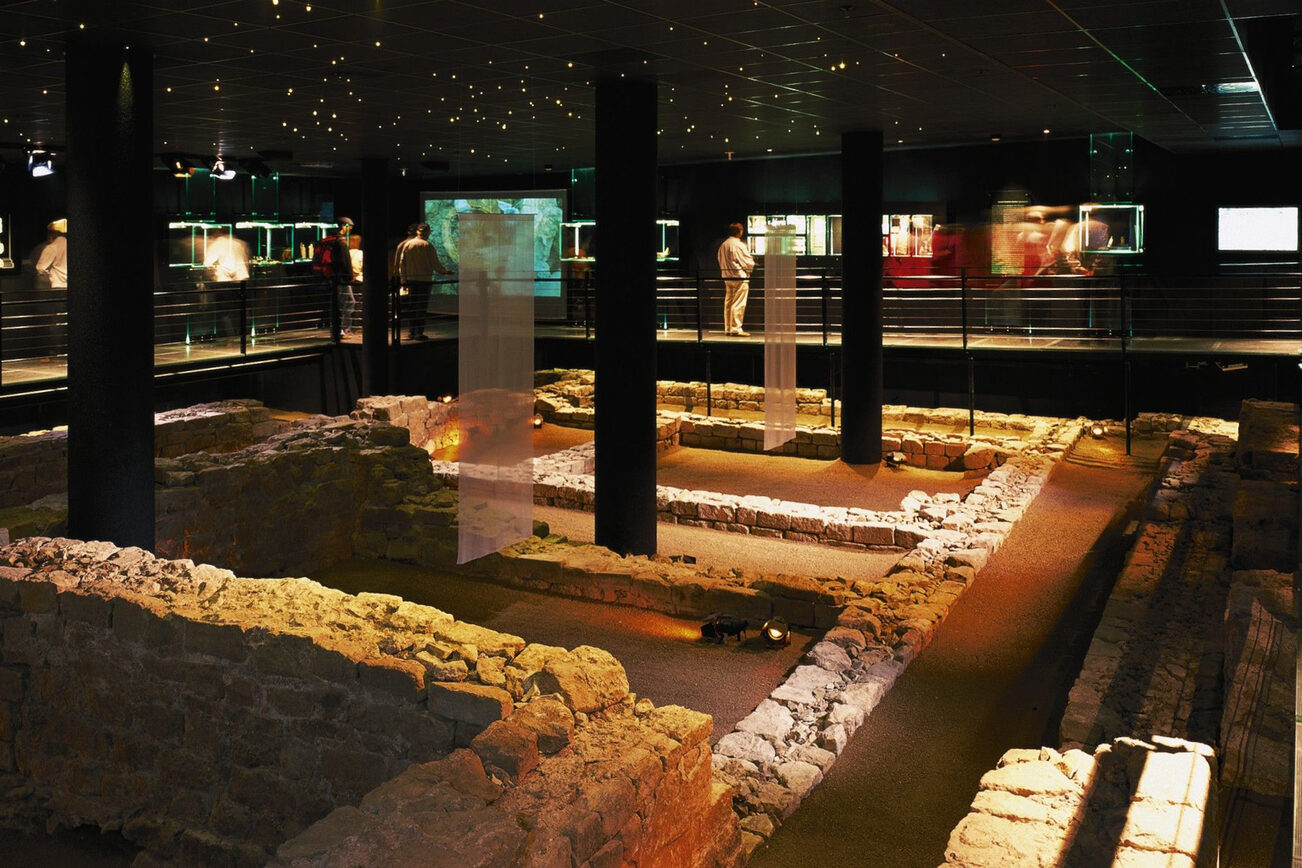
In 2000, construction work uncovered parts of a sanctuary dedicated to the ancient Egyptian goddess Isis and the Oriental Mater Magna, which was probably used until the 3rd century. The remains of the sanctuary are one of the main attractions of Roman Mainz.
The Rhineland-Palatinate Ministry of Culture has named the sanctuary for Isis and Mater Magna in the Römerpassage, which is supported by the Roman Mainz Initiative (IRM), "Museum of the Month for October 2023" on the occasion of its 20th anniversary.
Even today, the initiative is responsible for the preservation and atmospheric presentation of the finds, as well as for communicating the significance of the sanctuary for Isis and Mater Magna.
The association also offers a comprehensive range of educational programs and collaborations, ranging from guided tours for school classes and groups, city tours, lectures, and day trips to themed collaborations with local partners from the fields of research, culture, sports, and retail. The association also organizes Roman festivals and concerts with ancient instruments in the Roman Theater and the Roman Passage.
Contact us
Address
Isis- und Mater Magna-Heiligtum
Römerpassage 1
55116 Mainz
Telephone, fax and e-mail address
Your way to us
Kupferberg Museum
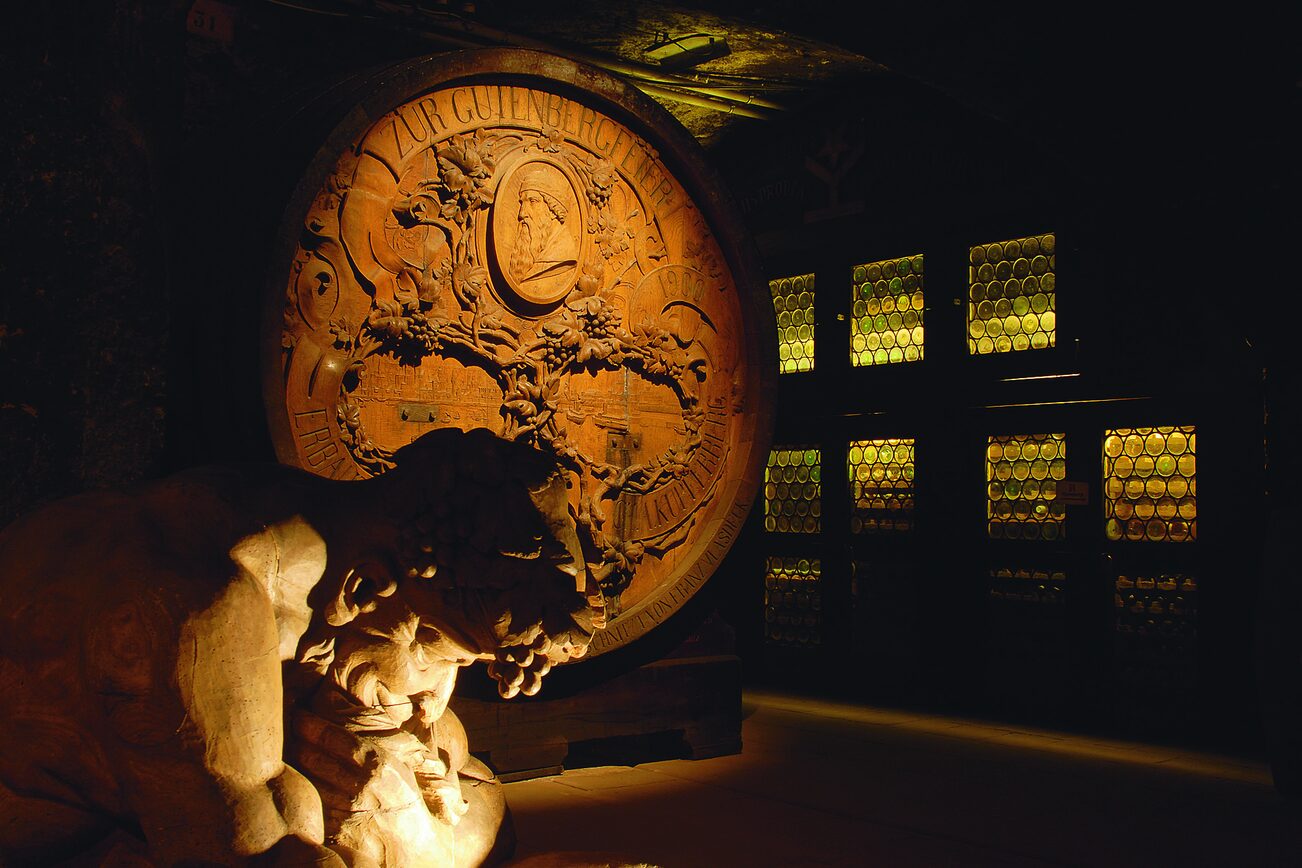
Sparkling wine has a long tradition in Mainz. The main building of the Kupferberg sparkling wine cellars on Mainz's Kupferberg terrace is home to a restaurant and a museum. On an exclusive guided tour, you can marvel at the largest collection of sparkling wine and champagne glasses, as well as wine amphorae and jugs that are over 2,000 years old, take a seat in Otto von Bismarck's former "Bureau des Auswärtigen Amtes" (Foreign Office), and discover the medieval cellars and the historic Traubensaal (Grape Hall) – a masterpiece of Art Nouveau.
Contact us
Address
Kupferberg-Museum
Kupferbergterrasse 15
55116 Mainz
Telephone, fax and e-mail address
Your way to us
Map
German Cabaret Archive
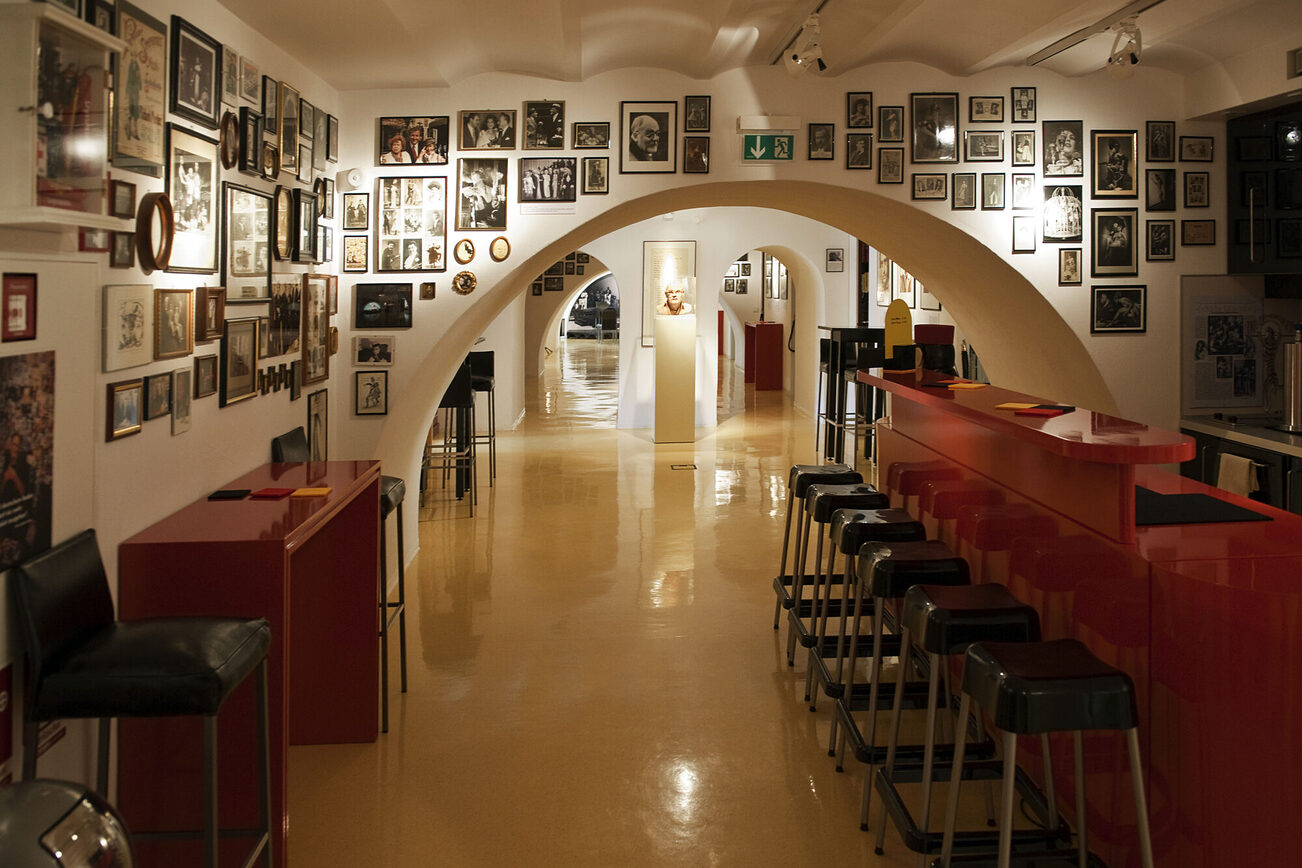
The archive is a research center and source for all cabaret enthusiasts. The diverse forms of cabaret, especially political and literary cabaret, are continuously archived and scientifically cataloged. Countless manuscripts and typescripts, photos, posters, (director's) books, audio recordings, sheet music, caricatures, special exhibits, documents, and the estates and bequests of famous cabaret artists, authors, singers, and cabaret stages fill the walls, rooms, folders, and shelves of the historic Proviantmagazin.
Contact us
Address
Deutsches Kabarettarchiv
Neue Universitätsstraße 2
55116 Mainz
Telephone, fax and e-mail address
Your way to us
Map
Mainz Art Gallery
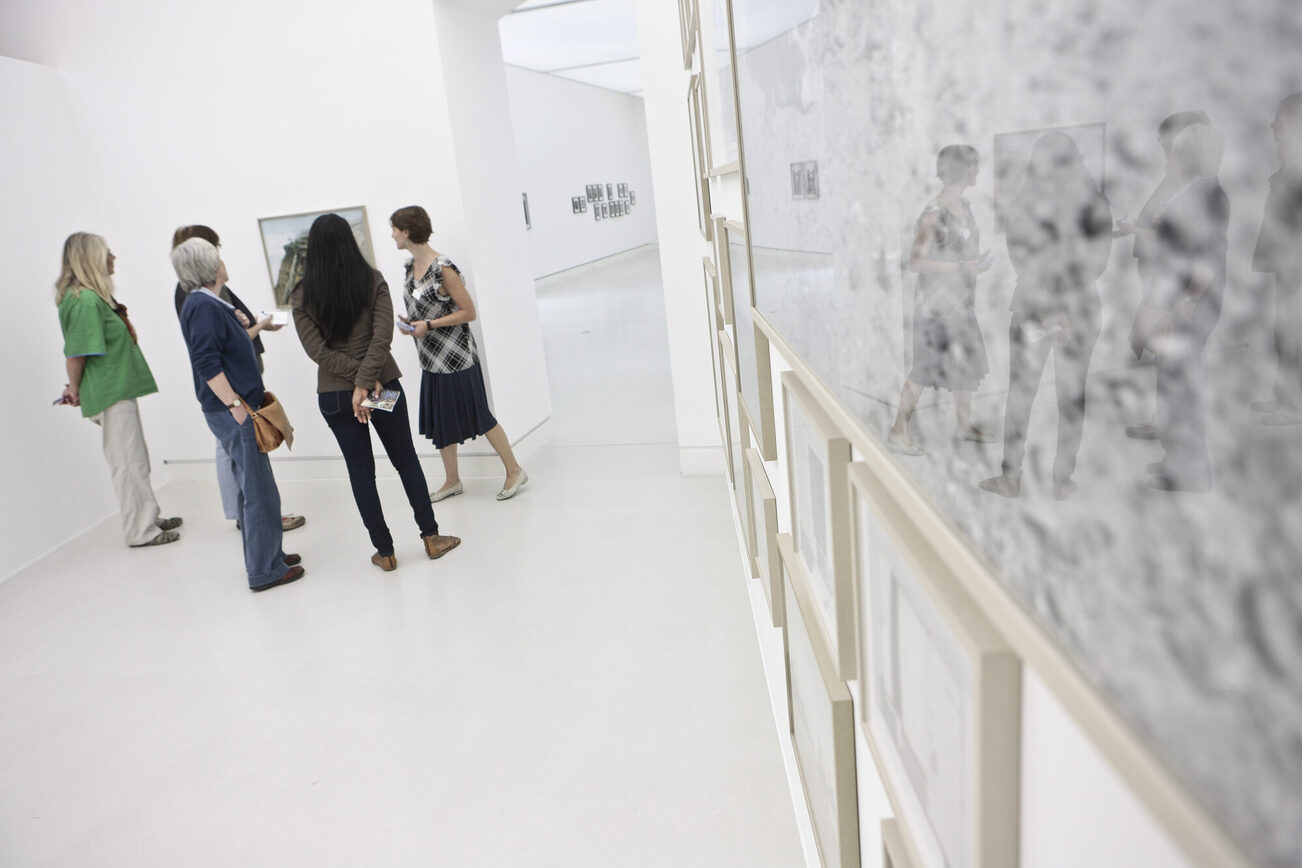
The Kunsthalle Mainz is an exhibition venue for international contemporary art.
The Kunsthalle Mainz showcases contemporary artistic positions that represent and communicate current topics in art, politics, and society. Through a program of outstanding exhibitions, it has set itself the task of introducing people to art and its themes and establishing Mainz as a permanent location for international art and current discourse.
Contact us
Address
Kunsthalle Mainz
Am Zollhafen 3
55118 Mainz
Telephone, fax and e-mail address
Your way to us
Map
City History Museum
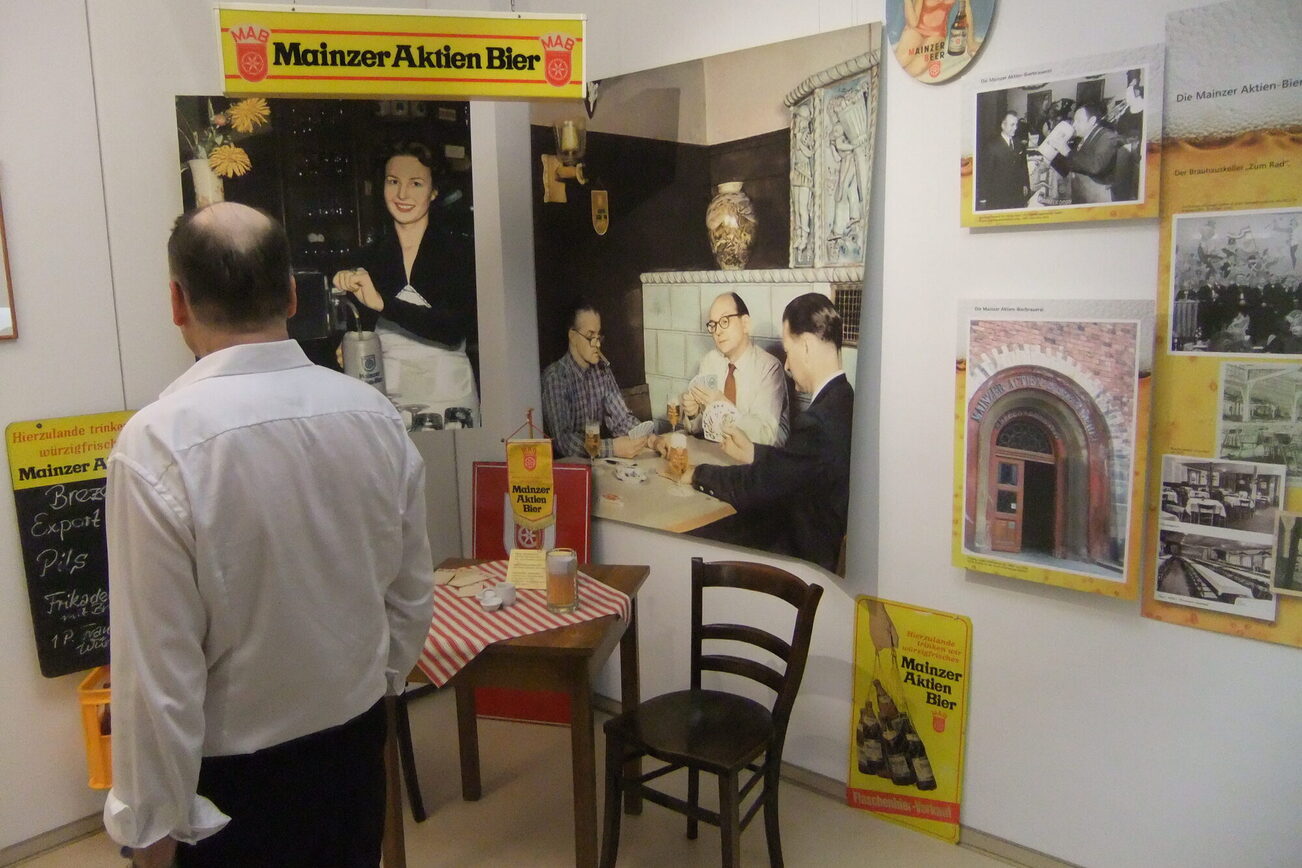
The private Mainz City History Museum is dedicated to topics relating to social, economic, and cultural history. Since 2003, it has been located in the historic setting of the Citadel monument zone, in the immediate vicinity of the 2,000-year-old "Drusus Stone." In addition to the permanent exhibition, special exhibitions are regularly held. The museum is sponsored by the "Friends of the Mainz City History Museum" association.
Contact us
Address
Stadthistorisches Museum
Zitadelle, Bau D
55131 Mainz
Telephone, fax and e-mail address
Your way to us
Garrison Museum
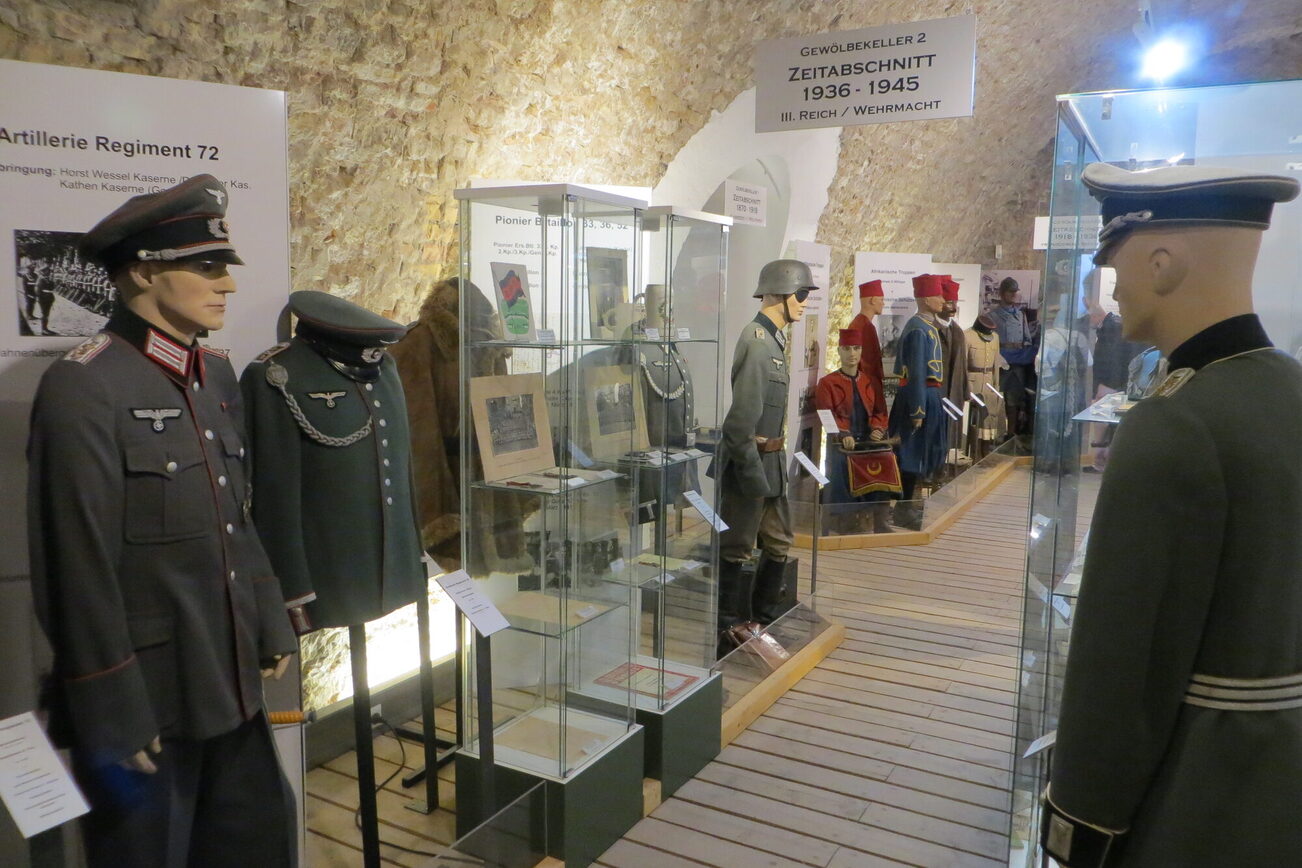
The museum's extensive collection includes uniforms, documents, and reservist items relating to the garrison history of the city of Mainz. The numerous smaller and larger exhibits were collected through donations and by members of the museum's support association. Informative and entertaining guided tours of the museum are offered on request and on occasions such as the Citadel Festival.
All individual items in the museum were lovingly acquired and processed by the Förderkreis Mainzer Garnisonsmuseum e.V. (Friends of the Mainz Garrison Museum). The aim of the association is to collect, preserve, and exhibit objects relating to the history of the garrison, as well as to conduct scientific research and publish findings.
The museum is located in the casemates of the citadel above the "Mainz – Römisches Theater" train station. Access is via the Zitadellenhof courtyard.
Contact us
Address
Garnisonsmuseum
Windmühlenstraße
55131 Mainz
Telephone, fax and e-mail address
Your way to us
Museum Gonsenheim
The Museum Gonsenheim is a genuine local history museum that uses numerous exhibits to provide insight into the successful development of what was once a small Linear Pottery village 7,000 years ago into what is now Mainz's largest suburb with 24,000 inhabitants. Visitors can marvel at jewelry and ceramics from all eras, a 100-year-old horse-drawn carriage, a barrel organ with a large repertoire, and much more.
Contact us
Address
Museum Gonsenheim
Budenheimer Straße 2
55124 Mainz
Telephone, fax and e-mail address
Your way to us
Map
Brick Museum Mainz-Bretzenheim
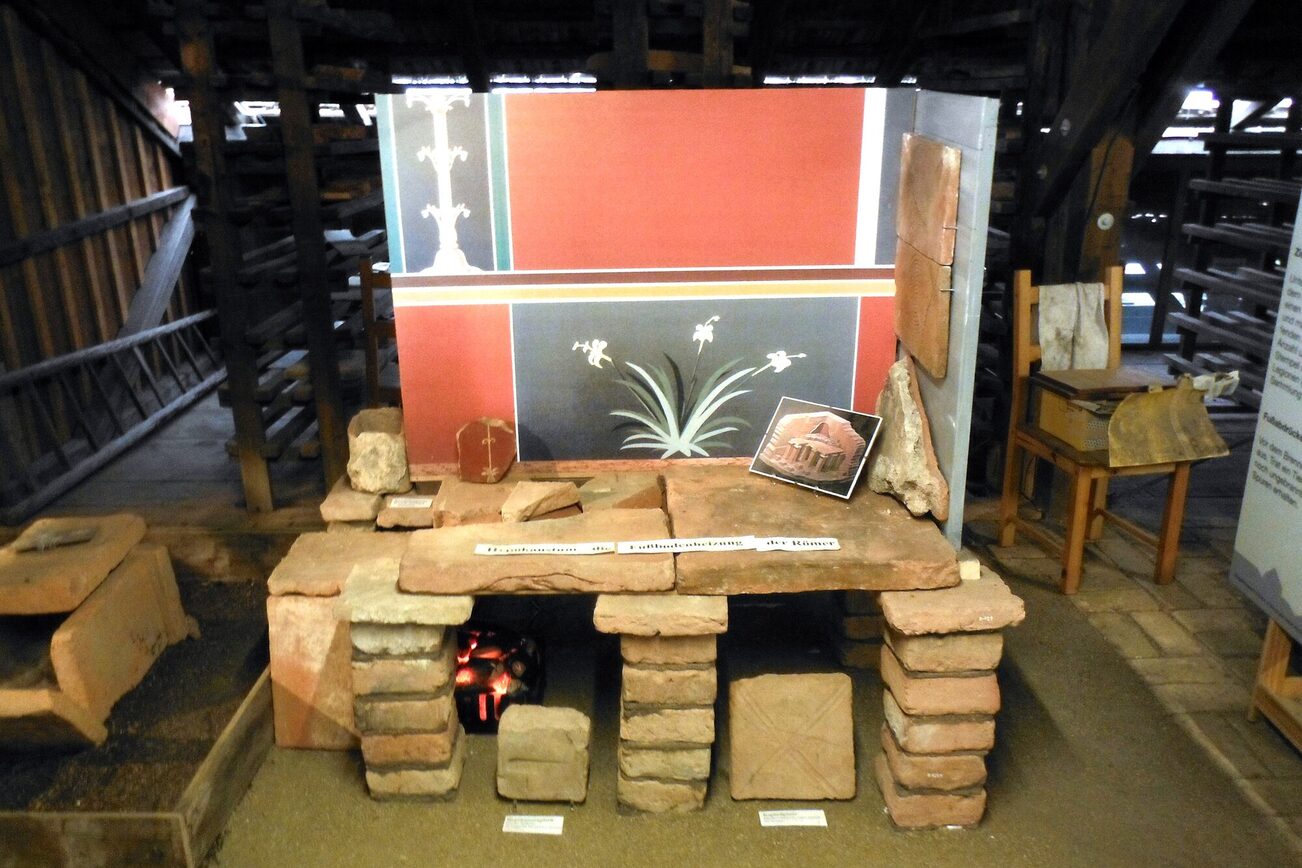
The Brick Museum displays original artifacts, illustrations, and explanatory texts. The oldest brick fragments are over 4,000 years old; the museum houses a particularly extensive Roman collection and exhibits bricks and roof tiles from the Middle Ages through the modern era.
The Brick Museum, located in the Old Brickworks in Mainz-Bretzenheim, was established based on Roman brick and clay pipe finds made by two amateur archaeologists. The exhibition site itself is already a special cultural monument: the ring kiln in which the bricks were fired is the only one in Rheinhessen that has been completely preserved. It was designated a protected industrial monument in 1992 and is part of the Industrial Heritage Trail. The museum is now housed in the approximately 600 m² half-timbered structure built over the ring kiln.
With more than 2,000 exhibits, the museum showcases the full diversity of bricks, ranging from simple clay bricks to intricate interlocking tiles. The museum features bricks spanning a period of 4,000 years, including a particularly comprehensive Roman collection as well as bricks from the Middle Ages to the present day. It demonstrates the rich variety of roof tile shapes and showcases the wide range of designs that can be stamped, engraved, or embossed on bricks.
The museum is operated by the Verein der Ziegeleifreunde Mainz e. V. (Mainz Brickworks Friends Association).
Contact us
Address
Ziegelmuseum Mainz-Bretzenheim
Alte Ziegelei 1
55128 Mainz
Telephone, fax and e-mail address
Your way to us
Museum Castellum
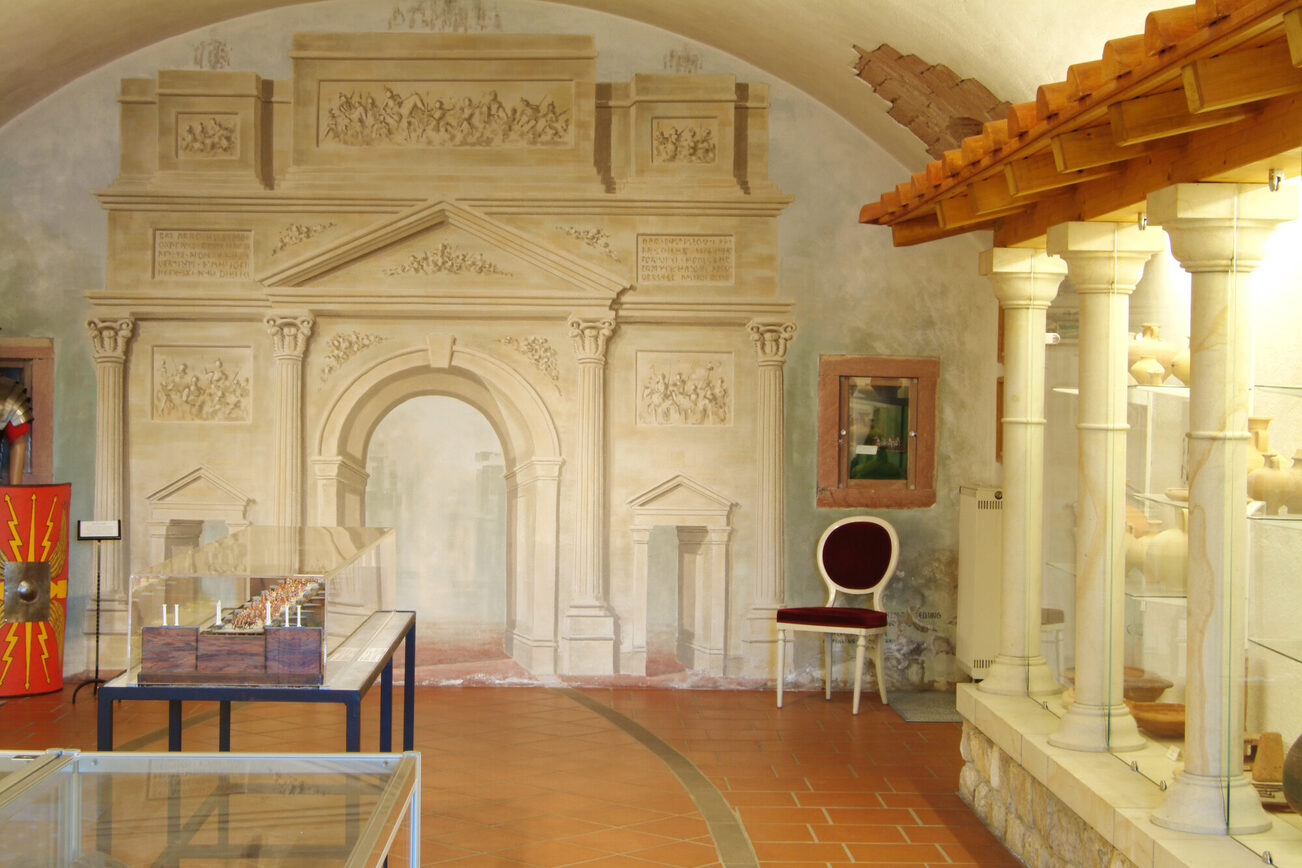
The Castellum Museum in the Reduit on the banks of the Rhine in Kastel offers fascinating insights into Kastel's history, which spans over 2,000 years. There is a particular focus on the Roman period: archaeological finds such as terracotta vessels, bricks, elements of the Roman aqueduct, tableware made of terra sigillata, and a replica of a Roman thermal bath illustrate everyday life in ancient Castellum Mattiacorum. Among the most significant exhibits are parts of a coin hoard, Roman medical instruments, a bust of Emperor Constantine, altars, stone coffins, and the Kastel Aedicula.
Other exhibitions show the development of Kastel from the Middle Ages to the present day, supplemented by historical uniforms, photographs, and city maps. For many years, the Kastel Carnival Cabinet has also been part of the museum, presenting exhibits on the local carnival tradition.
Contact us
Address
Museum Castellum
Reduit / Kasteler Museumsufer
55252 Mainz-Kastel
Telephone, fax and e-mail address
Rhine Boat Mill Ginsheim

Unique in Europe, the reconstruction of the last productive Rhine ship mill demonstrates the technical state of milling around 1900 using authentic, operational equipment: various grain cleaning machines as well as grinding and sieving devices.
For centuries, ship mills shaped the flow of the Rhine. In 1840, 17 of these floating mills were still in operation in Mainz, and as many as 21 in Ginsheim. With industrialization and increasing shipping traffic, they gradually disappeared. The last Rhine ship mill was in operation in Ginsheim until 1928, was later moved to Mainz, and was destroyed in 1945.
Today, the authentic reconstruction of the last productive Rhine ship mill provides unique insights into historical technology and working conditions.
Contact us
Address
Rheinschiffsmühle Ginsheim
An der Schiffsmühle 1
65462 Ginsheim-Gustavsburg