We use ReadSpeaker on mainz.de. ReadSpeaker reads the texts on mainz.de to you. To be able to use this function, you must open it by clicking on the "Share external content" button. You can revoke your consent at any time in the data protection settings at https://www.mainz.de/datenschutz.
Packaging Act: What obligations apply to traders?
Overview of the deposit and take-back obligation for disposable drinks packaging and the reusable offer obligation for to-go goods.
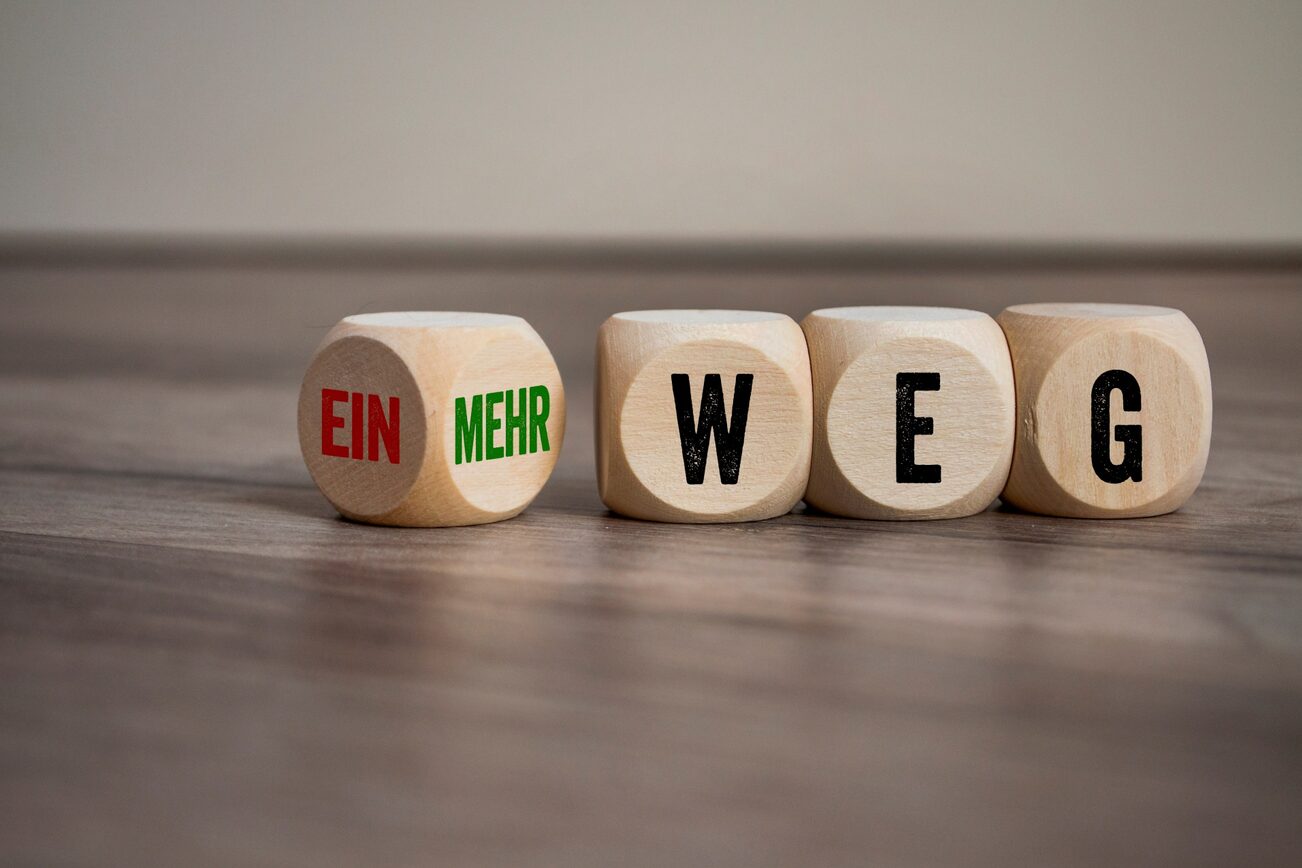
Cube with reusable and disposable
Deposit and take-back obligation for disposable drinks packaging (Sections 31 and 32 of the Packaging Act)
The Packaging Act (VerpackG) obliges manufacturers and distributors to charge a deposit on most single-use beverage packaging. The Packaging Act also regulates the obligation to take back single-use beverage packaging.
Which disposable drinks containers are subject to a deposit and which are not?
In principle, a deposit must be charged for all single-use beverage containers (in particular beverage cans or single-use plastic beverage bottles). No deposit needs to be charged for the following containers:
Beverage packaging that is not intended for sale in Germany
Beverage packaging with a filling volume of less than 0.1 liters or more than 3.0 liters
In addition, no deposit is required for beverages specifically marketed for infants and young children (dietary beverages) if they are packaged in single-use plastic beverage bottles. A deposit must still be charged for dietary beverages in beverage cans.
How much is the deposit and how can you recognize packaging that is subject to a deposit?
Most single-use beverage containers bear the DPG logo. Single-use beverage containers that do not have a DPG logo can be relabeled. The deposit for single-use plastic beverage bottles and beverage cans is a uniform 25 cents.
Do empty disposable drinks containers have to be taken back?
Distributors of single-use beverage containers must take them back, emptied of their contents, at the point of sale or in the immediate vicinity during normal business hours in exchange for a refund of the deposit. This obligation only applies to the types of materials (e.g., glass, metal, plastic) that are also carried in the distributor's own product range. Distributors with a sales area of less than 200 m², on the other hand, are only required to take back single-use beverage containers of the brands that they themselves carry in their product range.
What other obligations do final distributors have?
All single-use beverage containers must be marked as subject to deposit in a permanent, clearly legible, and highly visible manner. In addition, clearly visible and legible information boards or signs bearing the word "EINWEG" (disposable) must be displayed at the point of sale in the immediate vicinity of the disposable beverage containers. The same applies to reusable beverage containers bearing the word "MEHRWEG" (reusable). These labels must be at least the same size and design as the price label for the respective product.
What are the consequences of violating the provisions of the Packaging Act?
Violations of the obligations under the Packaging Act can be punished as an administrative offense with a fine of up to €100,000 within the framework of deposit and return obligations.
Obligation to offer reusable packaging for to-go goods (Sections 33 and 34 of the Packaging Act)
The Packaging Act (VerpackG) obliges final distributors of single-use plastic food packaging and single-use beverage cups to also offer their goods filled in packaging in reusable packaging.
Who is the final distributor?
Final distributors are retailers who sell packaging to end consumers. If the goods are sold to customers in packaging, they are considered final distributors. These include bakeries, retailers, canteens, cafeterias, bistros, snack bars, (ice cream) cafés, and restaurants.
Are there exceptions for small companies?
Yes, for final distributors with a total of no more than five employees and a sales area of no more than 80 square meters. Here, customers can bring their own reusable containers, such as bowls and cans, and have them filled.
What regulations apply to vending machines?
The obligation to offer reusable containers also applies to sales from vending machines. However, it is sufficient if customers can fill their own reusable containers at the vending machine. Vending machines that are not accessible to the public and are only available to employees in companies are exempt from the obligation to offer reusable containers.
What other obligations do final distributors have?
Final distributors at the point of sale must indicate the option of filling goods in reusable packaging by means of clearly visible and legible information signs. This applies regardless of whether the reusable packaging is provided by the final distributors or brought in by the customers themselves. When delivering goods, the information must be provided accordingly in the media used (e.g., flyers, social media).
Can the price of reusable packaging be increased?
Goods in reusable packaging may not be sold at a higher price or under worse conditions than goods in disposable packaging. This does not apply to vending machines that are only available to employees in companies. A reasonable deposit may be charged.
What are the consequences of violating the provisions of the Packaging Act?
Violations of the obligations under the Packaging Act can be punished as an administrative offense with a fine of up to €10,000 for violating the obligation to offer reusable packaging.