
Judas tree
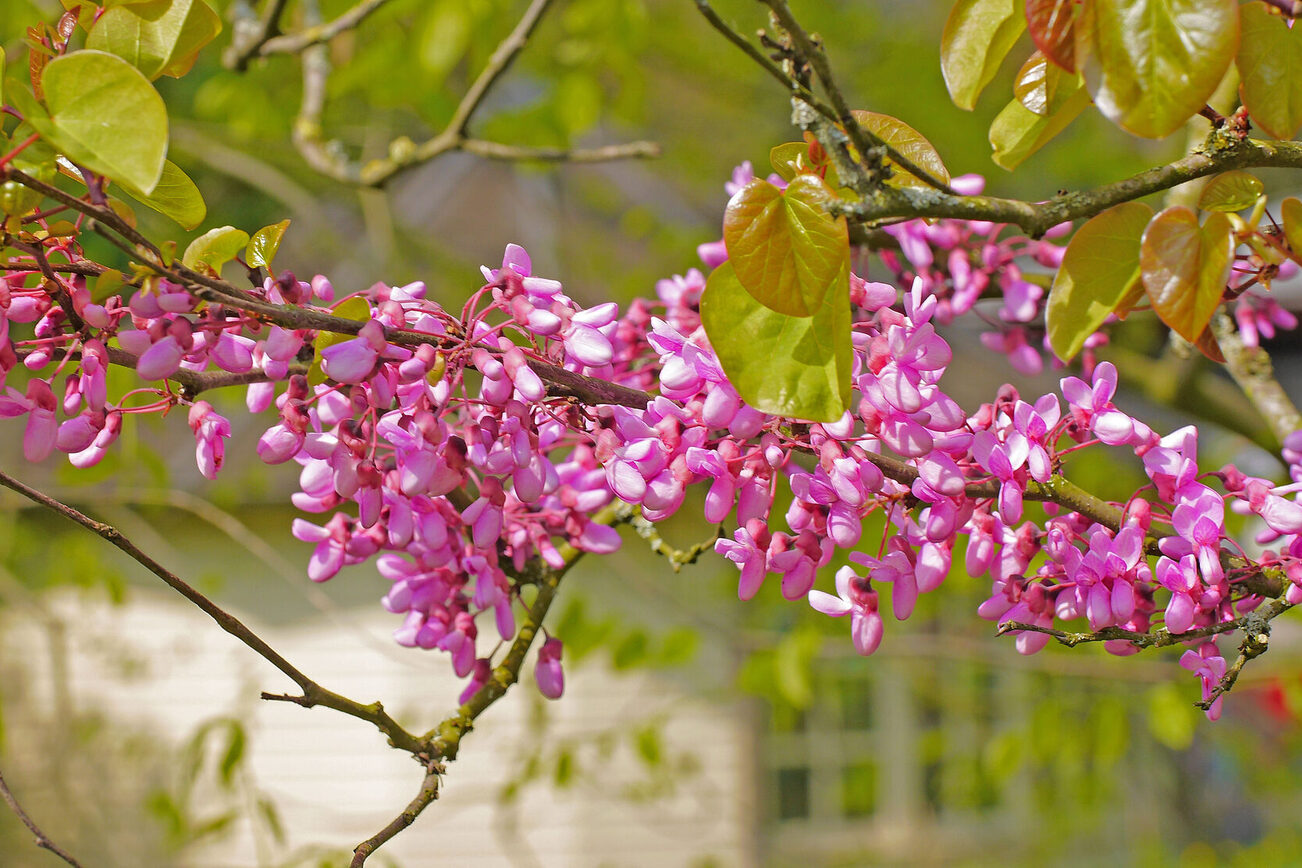
While it can grow up to 10 meters tall in its native habitat, the Judas tree in our latitudes usually reaches its final height of 6 to 8 meters. Both there and here, however, it is characterized by its extremely slow growth. So if you want to green your property as quickly as possible, this tree is not necessarily the best choice. However, this is precisely why it is ideal for smaller properties and front gardens. What the Judas tree may lack in height, it more than compensates for in spring with a veritable explosion of color. The purple-pink, almost pink flowers appear in abundance from April onwards. Then the Cercis is an absolute eye-catcher.
- Origin: Western Asia
- Growth height: up to 10 meters in its native region; otherwise 6–8 meters
- Leaves: almost circular; 5–12 cm long and wide; broad heart-shaped at the base; bright yellow autumn color
- Flower: abundant from the end of April, up to 2 cm long; purple-pink to almost pink; in clusters of 4–10; flowers before leaf budding on old wood
- Fruit: 10–12 cm long, flat pods; from August; initially light green, later brown; remain on the tree over winter until well into the next growing season
- Soil/location: full sun; warm; sheltered; sandy-gravelly to loamy soils; wide range of soil reactions – slightly acidic to strongly alkaline; resistant to urban climate
- Special feature: Due to its growth characteristics, the Judas tree is particularly suitable for planting in areas with limited space. Due to its upright growth habit, without excessively protruding branches, planting near buildings can also be considered. Since it also develops strong and deep main roots and hardly any side roots, no pressure is exerted on the building's foundation. Due to these facts and its maximum height of about 8 m, it is not likely to be a candidate for a felling application.