
Ash maple
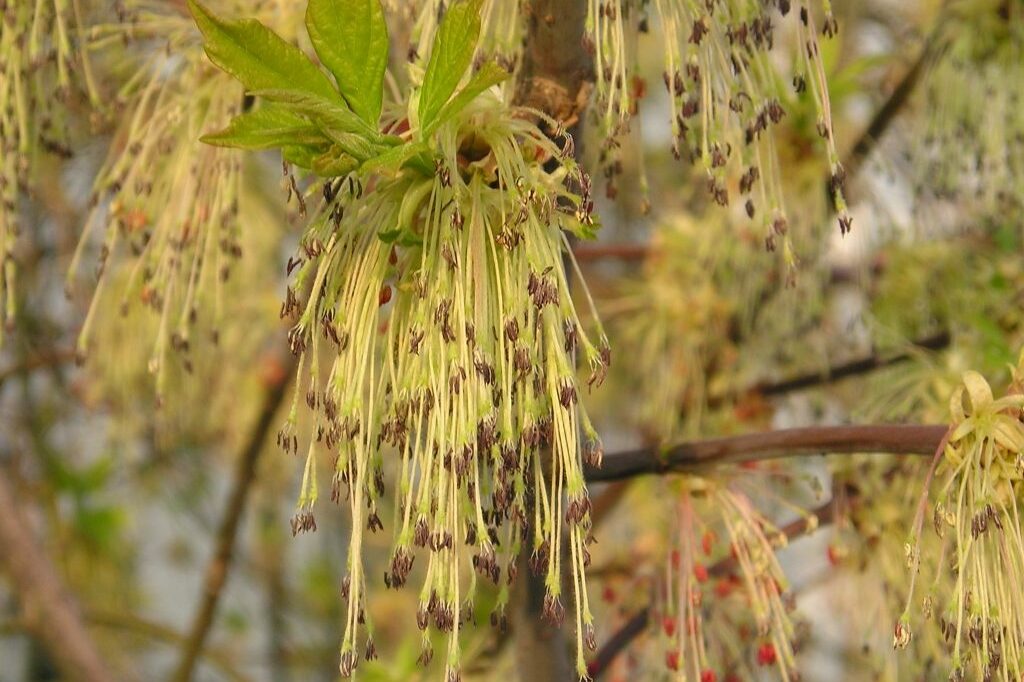
The ash maple is native to North America. It was introduced to Central Europe as early as 1688. It also occurs in numerous cultivated forms, which differ mainly in their foliage and, in particular, in their coloration. The best-known examples include Acer negundo 'Flamingo' (variegated ash maple), Acer negundo 'Aureo-variegatum' (golden variegated ash maple), and Acer negundo 'Variegatum' (silver variegated ash maple).
Like all cultivars, the species is characterized by very rapid growth in its youth. It tolerates the urban climate relatively well and is also comparatively insensitive to prolonged dry periods.
The ash maple can also be grown as a multi-stemmed large shrub, making it suitable for planting in larger urban gardens.
- Origin: Eastern North America
- Growth height: 15–20 meters
- Leaves: 3–5 coarsely lobed leaflets per leaf; autumn color yellow
- Flower: yellowish-white; hanging, long clusters before leaf budding; March–April
- Fruit: winged; numerous in hanging clusters; usually remain on the tree over winter
- Soil/location: sunny spot, fresh nutrient-rich soil