
St. Martin's Cathedral
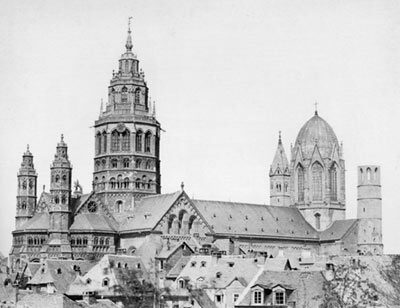
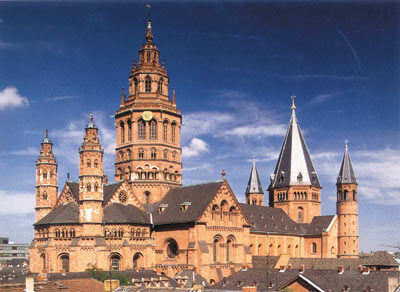
St. Martin's Cathedral, also known as Mainz Cathedral, is a special landmark of Mainz with its 1000 years of history.
1,000 years of city history

"This cathedral overlooking the Rhine Valley would have remained in my memory in all its power and grandeur, even if I had never seen it again," wrote the author Anna Seghers. A thousand years
after its construction, the mighty cathedral still defines the city's character and has shaped its history. Mainz, at the intersection of ancient trade routes, became the ecclesiastical center north of the Alps with the work of St. Boniface from 746/47 onwards; it was given the title "Holy See" when Willigis (975-1011) ruled in Mainz.

Willigis, archbishop and archchancellor of the German Empire, laid the foundation stone for the cathedral in 975, modeled on St. Peter's in Rome.
Seven royal coronations took place in Mainz Cathedral over the centuries. However, the new building did not survive its consecration day in August 1009 – a fire destroyed the structure, and the cathedral could not be used again until 1036. Willigis was therefore buried in St. Stephen's.

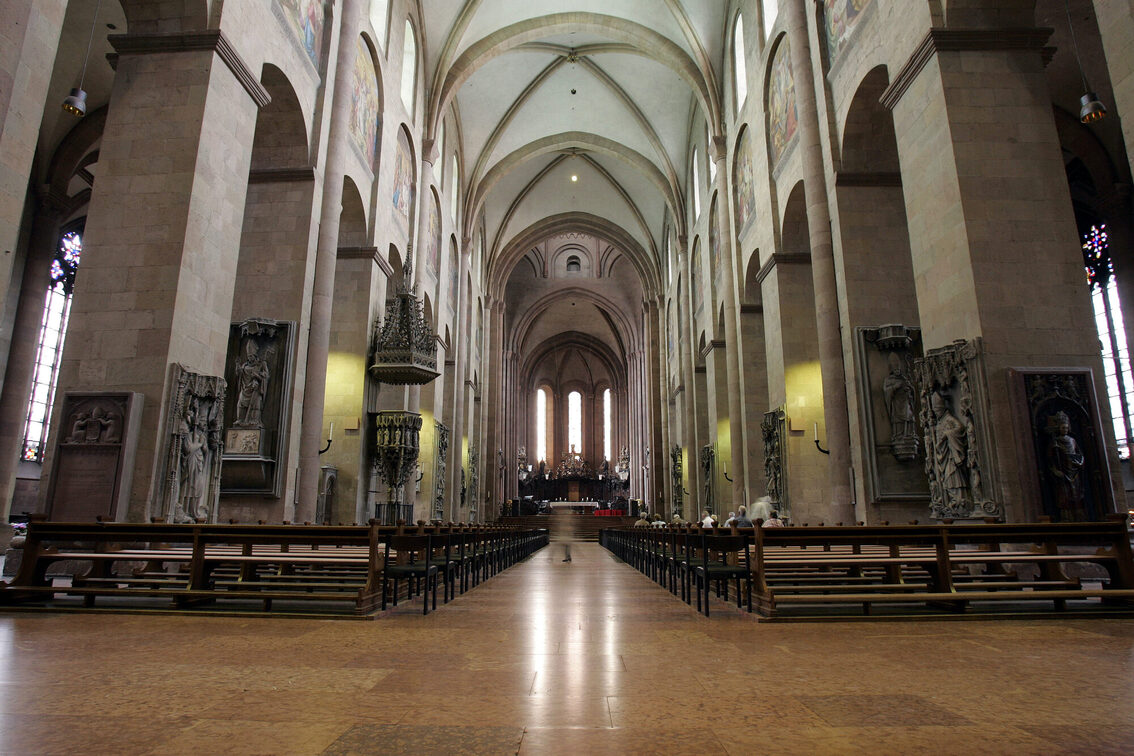
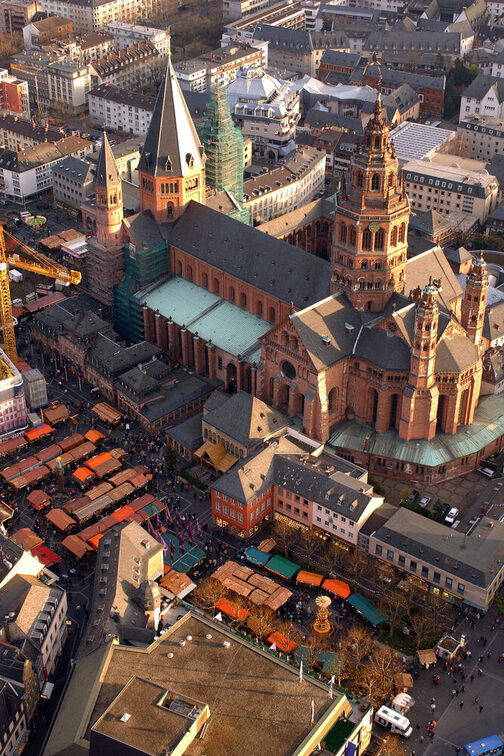
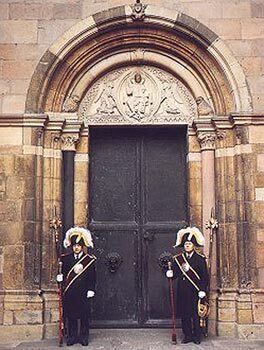
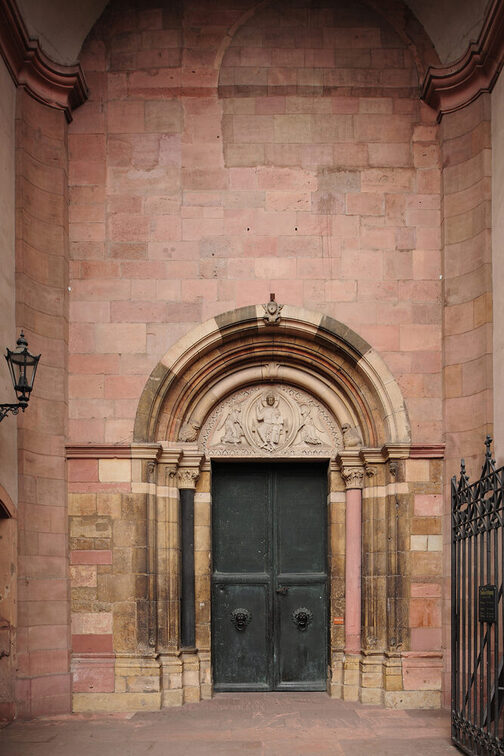
The oldest surviving feature of the Romanesque pillar basilica dates from his time: the bronze door wings of the market portal. The inscription on this ceremonial gate refers to the builder and the artist. The cathedral has three naves, two choirs, and numerous chapel extensions. The west choir with the main altar is dedicated to St. Martin, the east choir to St. Stephen.

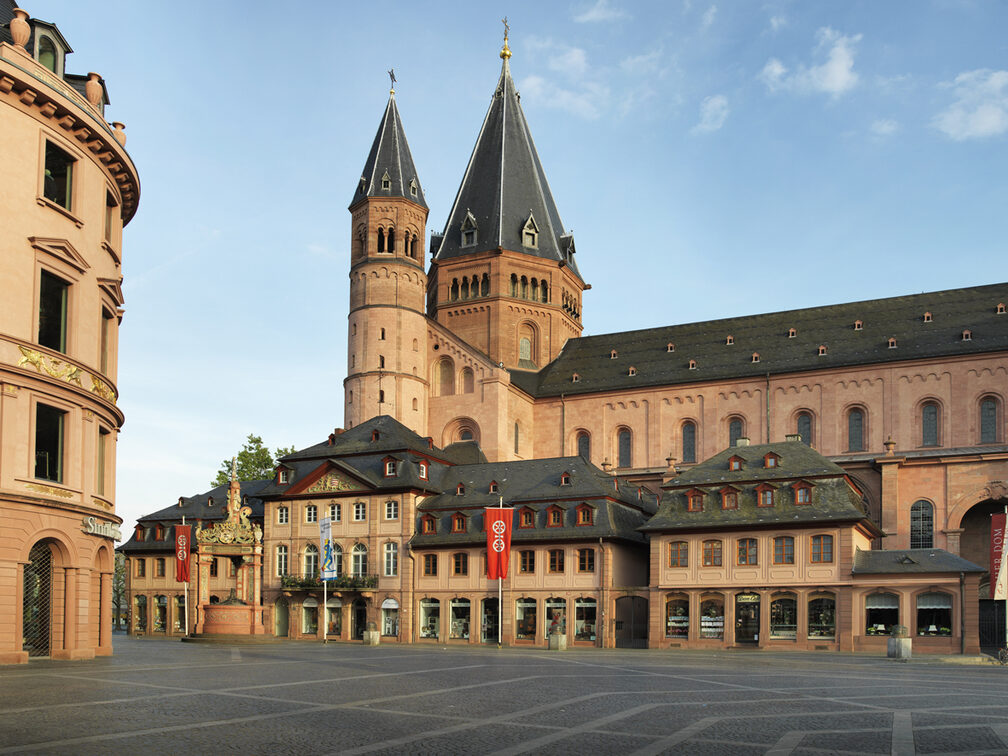
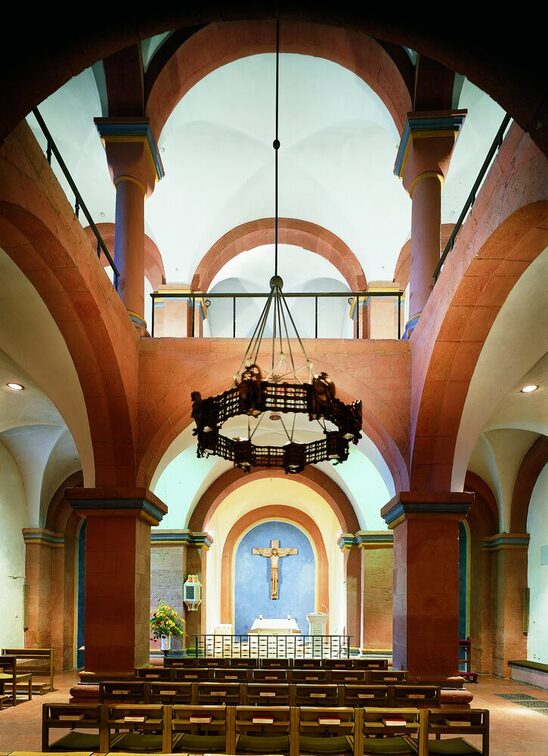
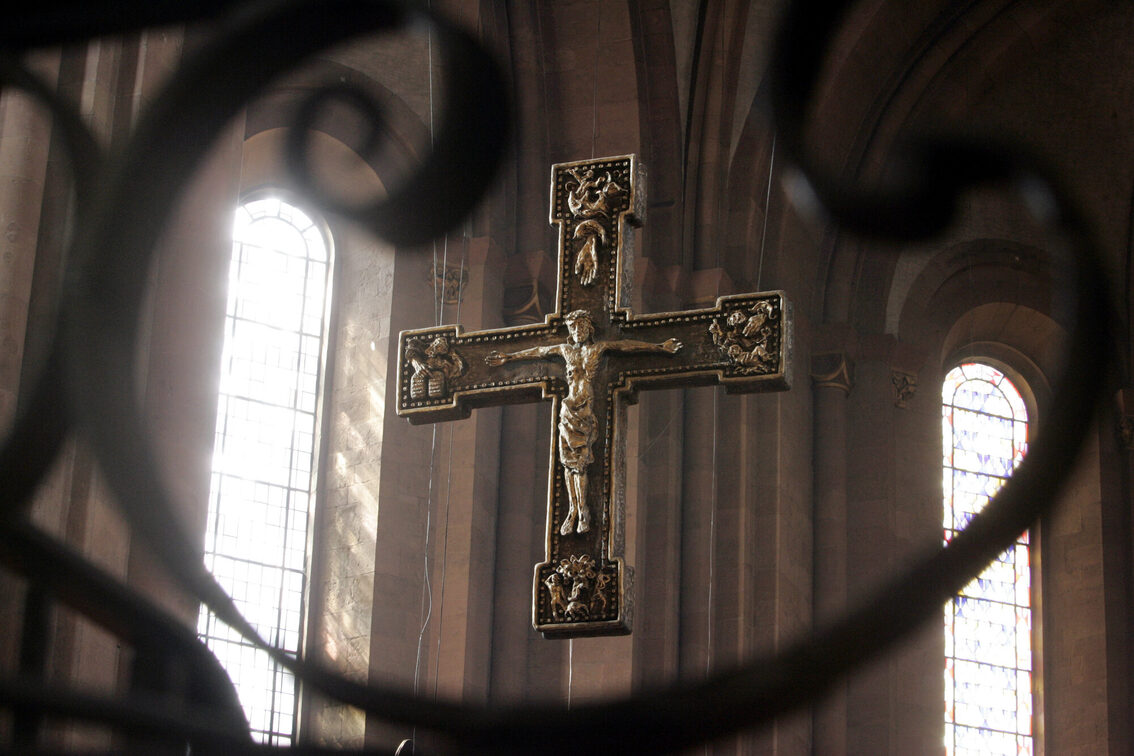
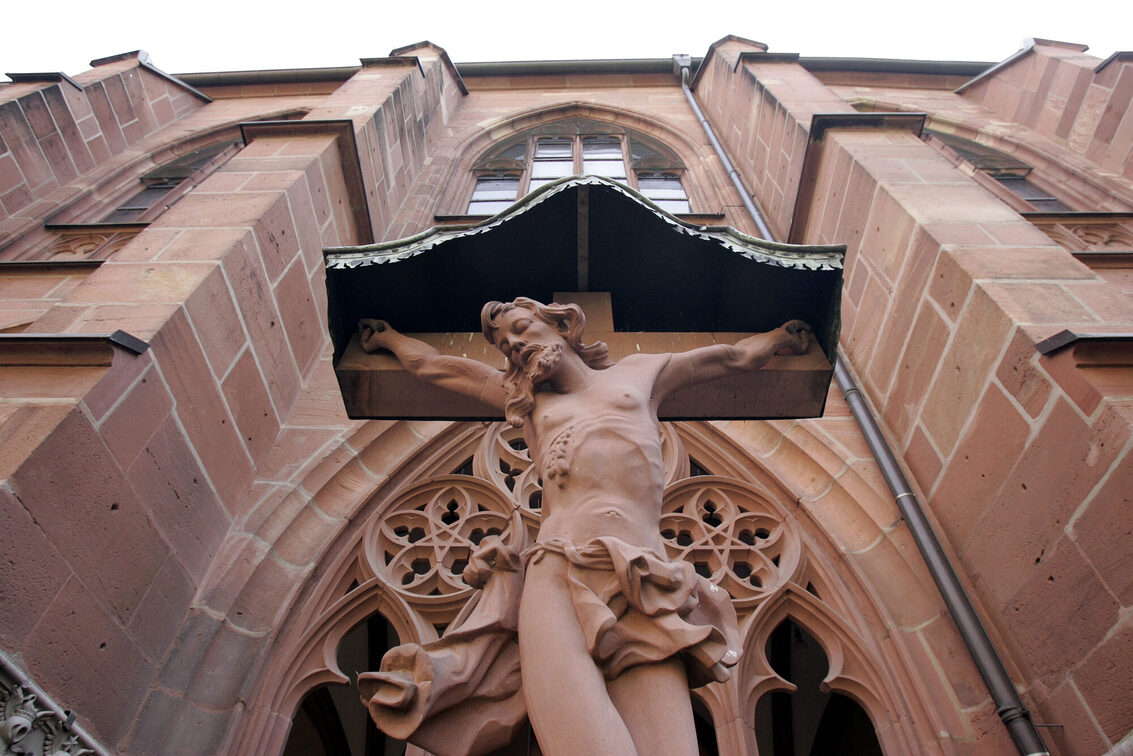
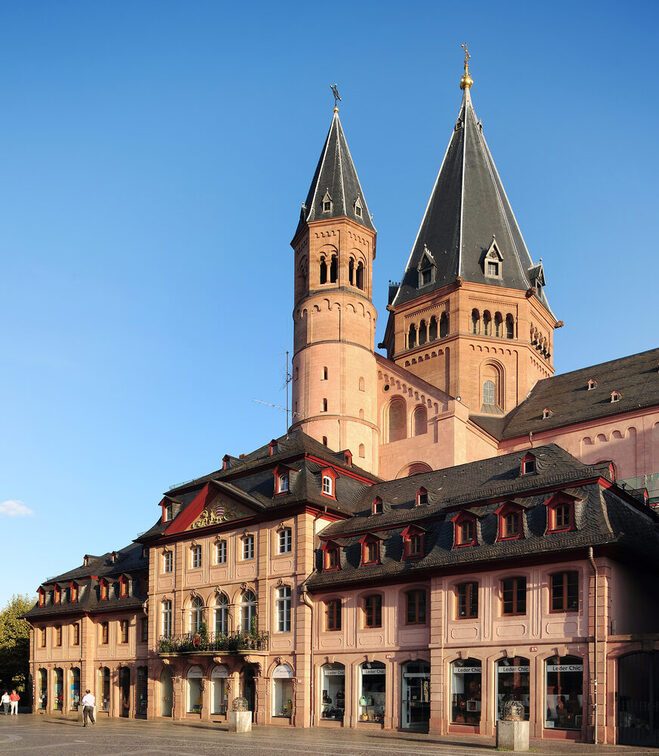
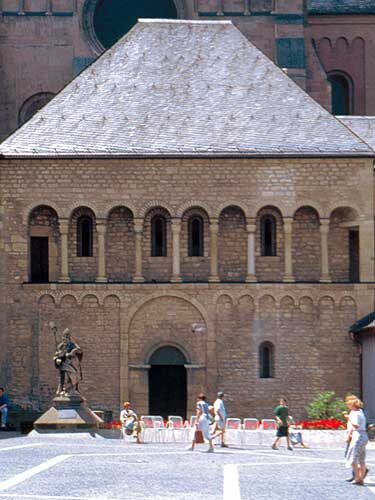
Mainz Cathedral is still surrounded by an almost complete enclosure. The "cathedral mountain" of red sandstone, which has grown over the centuries, contrasts with the Romanesque Gotthard Chapel, built of light-colored stone, which Archbishop Adalbert erected before 1137 as the archbishops' private chapel. A crucifix from the Staufer period is kept there. Ignaz Michael Neumann, son of the famous Baroque architect Balthasar Neumann, built the cathedral houses on the Leichhof in 1778/79. He provided them with fireproof stone roofs.
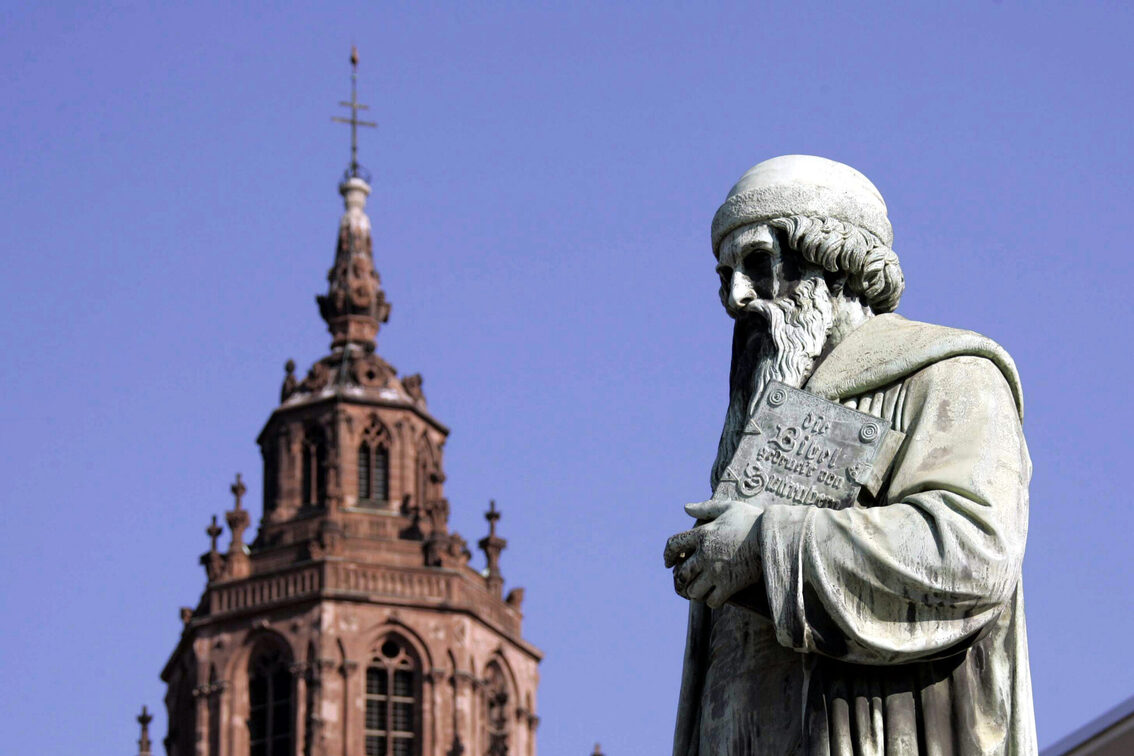
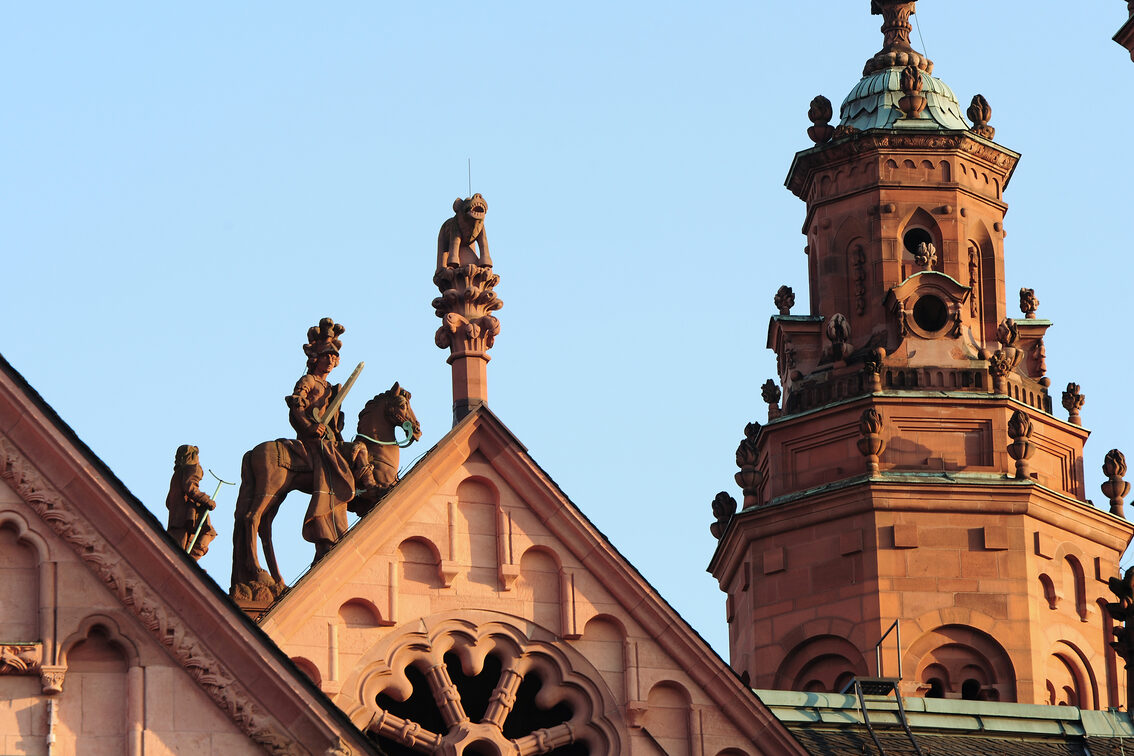
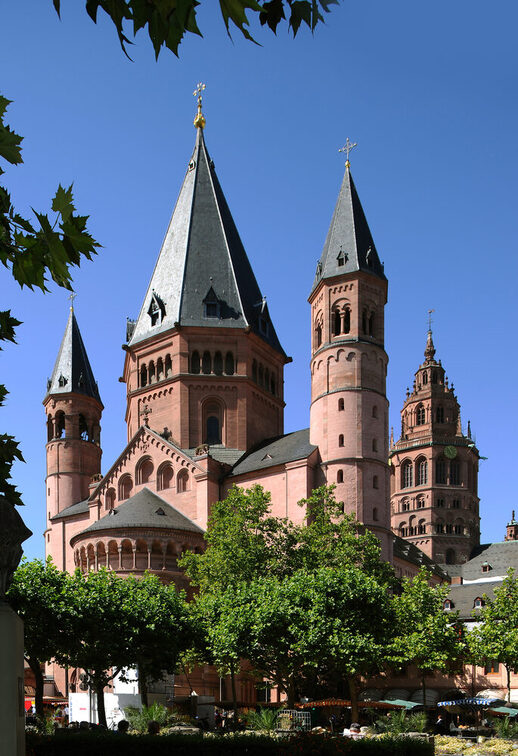
The cathedral had burned down seven times over the centuries, and the fear of fire was great. After a lightning strike in 1767, Neumann gave the western crossing tower a new spire, which references the Gothic bell floor in its design. It was built with stone again, rather than wood as in the past.

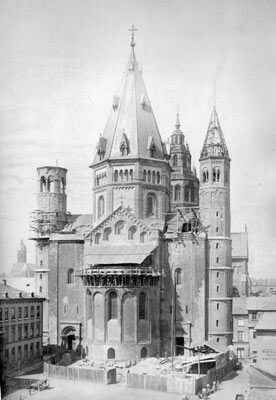
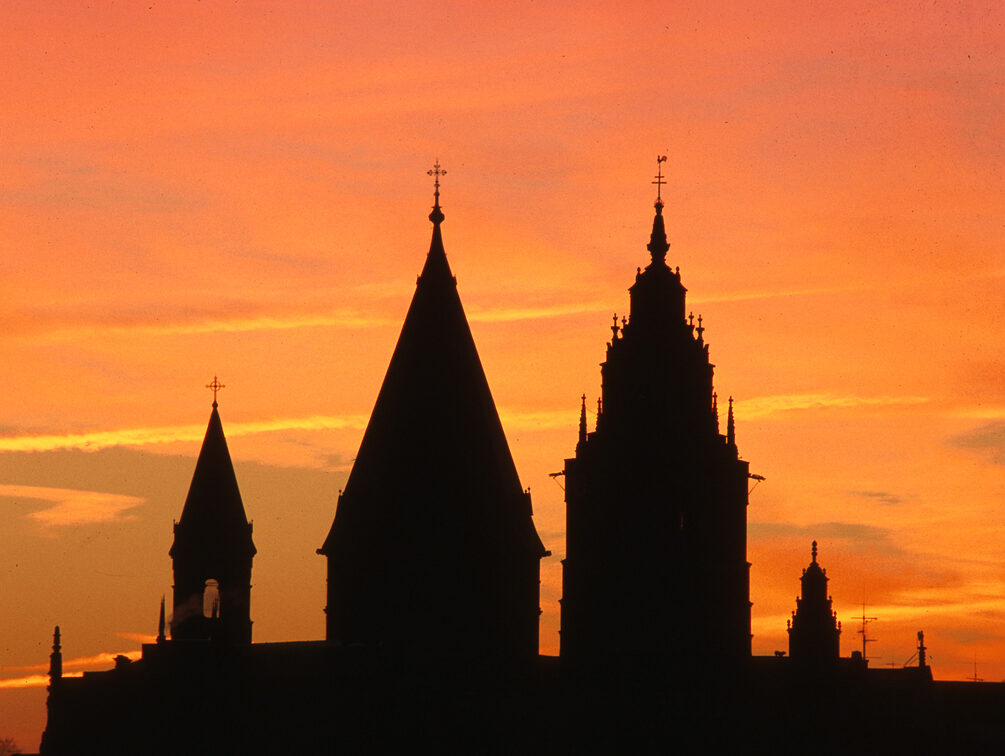
The east choir, with its walls over two meters thick, is the oldest part of the cathedral. Its crossing tower was partially destroyed in 1793 during the bombardment of Mainz and was rebuilt at the beginning of the 19th century. City architect Georg Moller designed a round iron dome, which was later removed in favor of a historicizing pointed roof. The capitals of the Liebfrauenportal, created by Lombard stonemasons around 1100, are a special decorative feature. In the 19th century, a crypt built in the 11th-century style was discovered under the east choir.
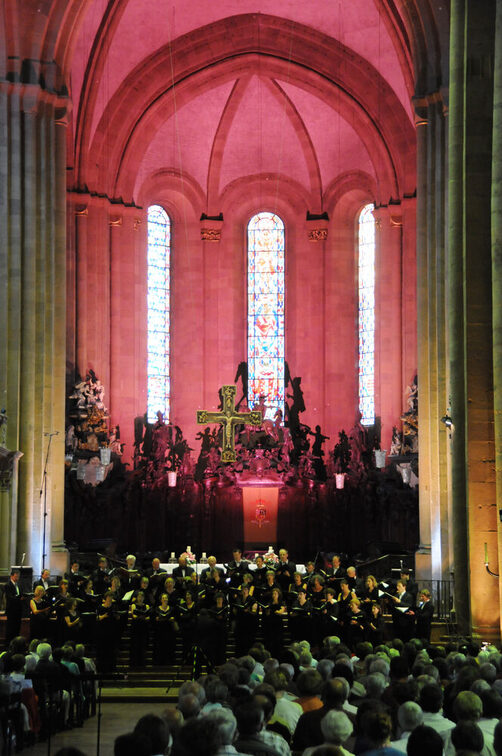
The late Romanesque west choir was built between 1200 and 1239. Its crossing tower was given a Gothic belfry in the 15th century. The carved Rococo choir stalls from 1767 were saved from being sold off by Bishop Joseph Ludwig Colmar, who had been appointed by Napoleon. It was also Colmar who convinced the French emperor not to demolish the cathedral after secularization in 1803.
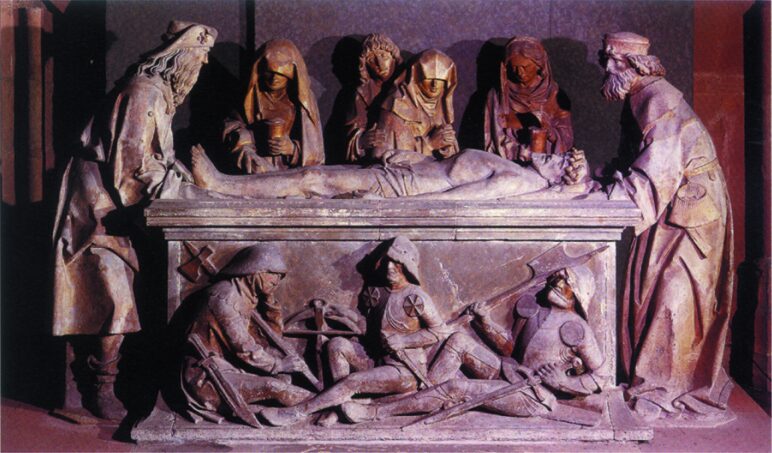
Since 1928, bishops have been buried in the new crypt beneath the west choir. Of the 84 bishops and archbishops who ruled after Boniface, 45 are buried in the cathedral. Many tombs dating from the 11th to the 20th century are attached to the pillars and walls of the church and cloister. The often idealized depictions of ecclesiastical dignitaries reflect the history of the Diocese of Mainz. Their completeness and good condition make this portrait gallery one of the most important sights in the cathedral. Old wall and glass paintings have not been preserved. The murals in the central nave, based on designs by the Nazarene painter Philipp Veit, date from the previous century.
One attraction is the altar of Mary in the Ketteler Chapel with the "beautiful woman of Mainz." The late Gothic wooden figure group (around 1510) is the work of sculptor Hans Backoffen, whose workshop produced three tombs in the cathedral.
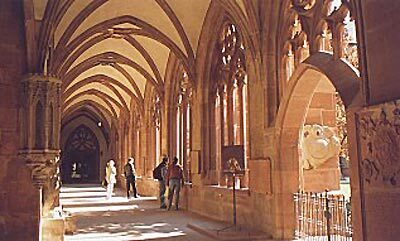
The 15th-century cloister has two stories. The cathedral canons used to live in the adjoining collegiate buildings. Today, they house the Episcopal Cathedral and Diocesan Museum. Religious art treasures from the late Middle Ages and modern times can be admired in the restored late Gothic exhibition rooms.
Picture gallery St. Martin's Cathedral

Opening hours
You can find the latest information on the website of the Diocese of Mainz.
Fairs
You can find the latest information on the website of the Diocese of Mainz.
Guided tours
Bookable via mainz STORE / Tourist Information
Markt 17 (Cathedral Square)
Telephone: 06131 242-888
and via the cathedral information center
at Am Markt 10
Telephone: +49 (0)6131 253-412
Literature
Arens, Fritz: Mainz Cathedral Revised
and expanded by Günther Binding. 2nd revised and expanded edition. - Darmstadt: Wiss. Buchges., 1998. - 159 pp. : III., graph. ill. Bibliography pp. 154-155
ISBN 3-534-13729-9
City of Mainz, City Library, call number: Mog 1901
Lebendiges Rheinland-Pfalz.
Journal for Economy, Science, and Culture
Mainz Cathedral Through the Ages
Issues I and II/2002, Volume 39