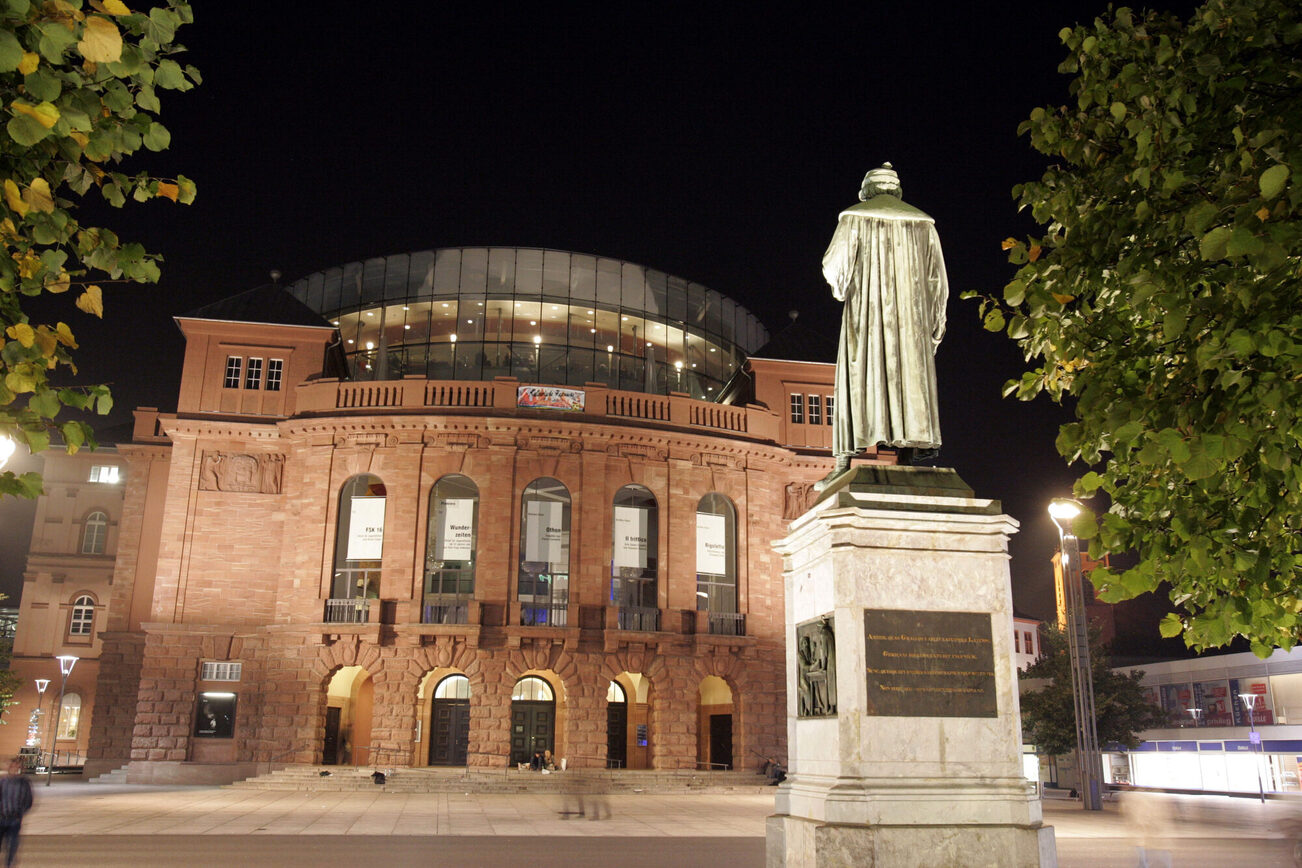
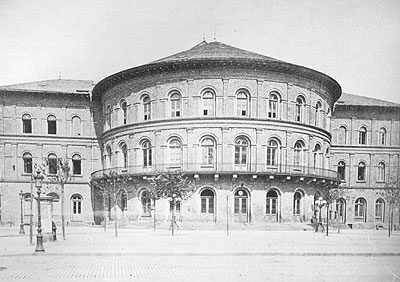
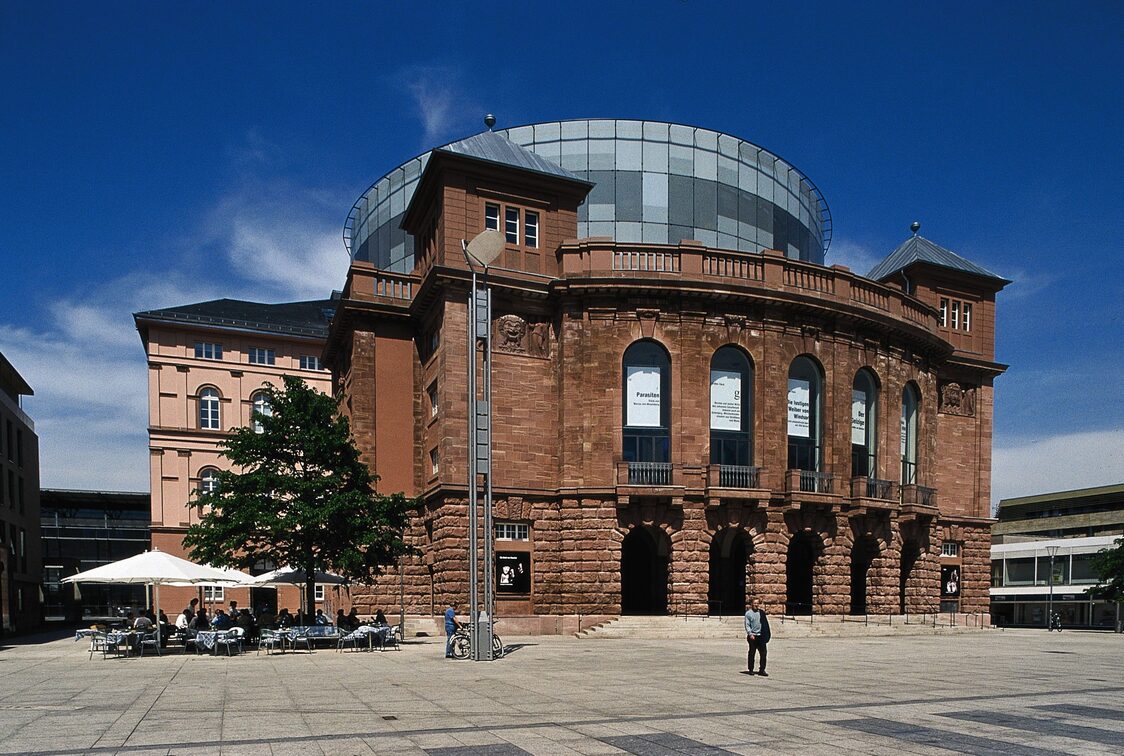
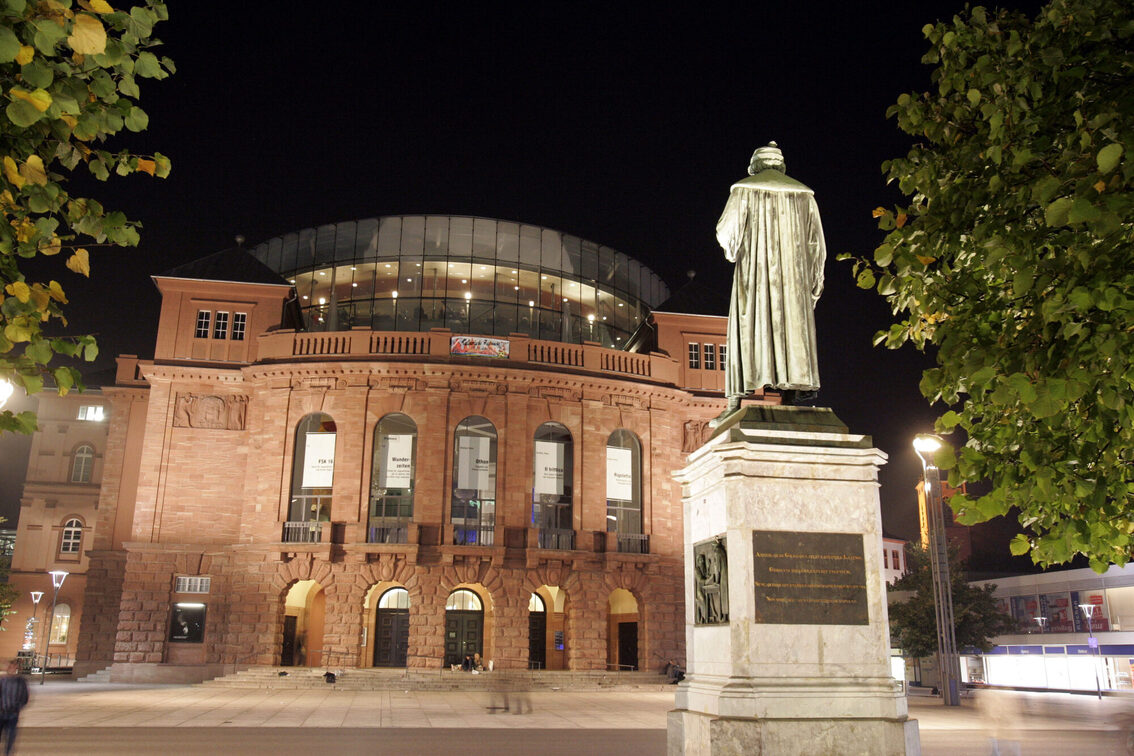
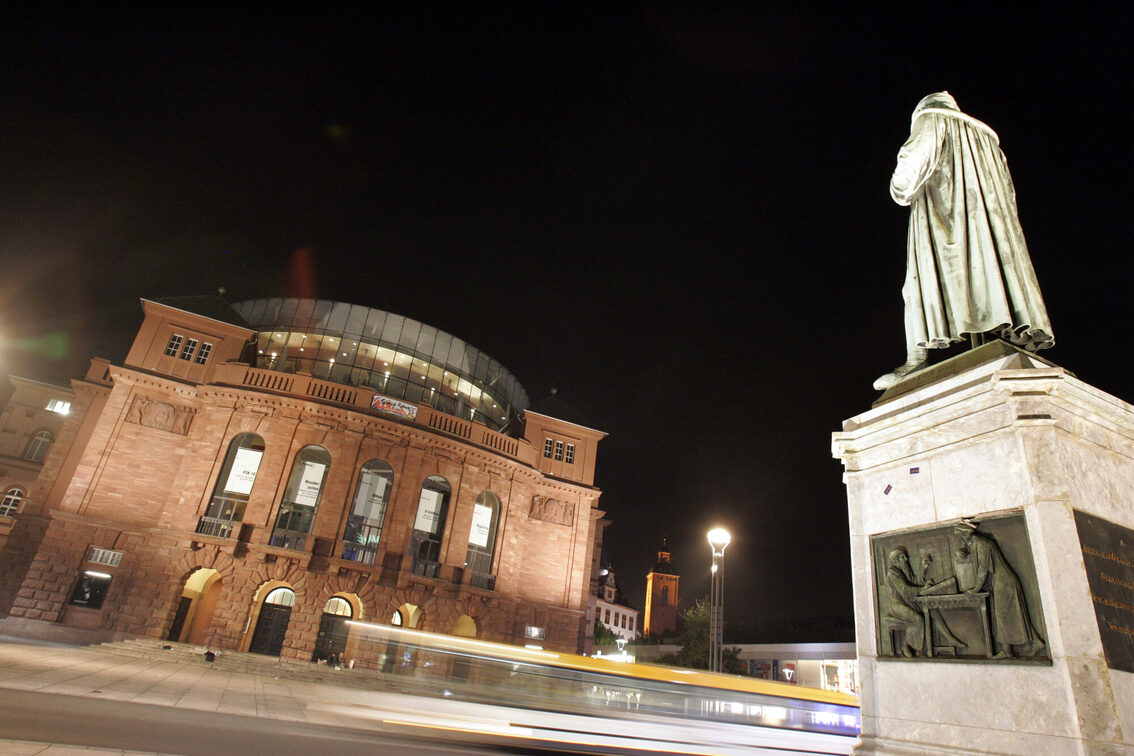
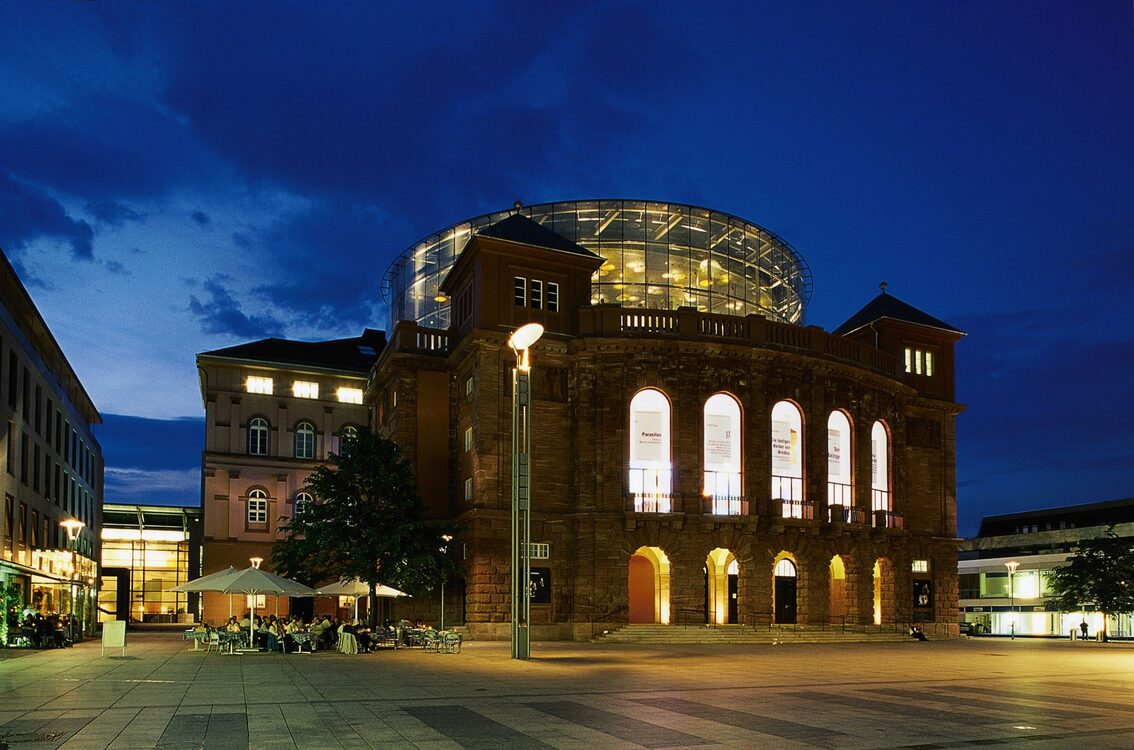
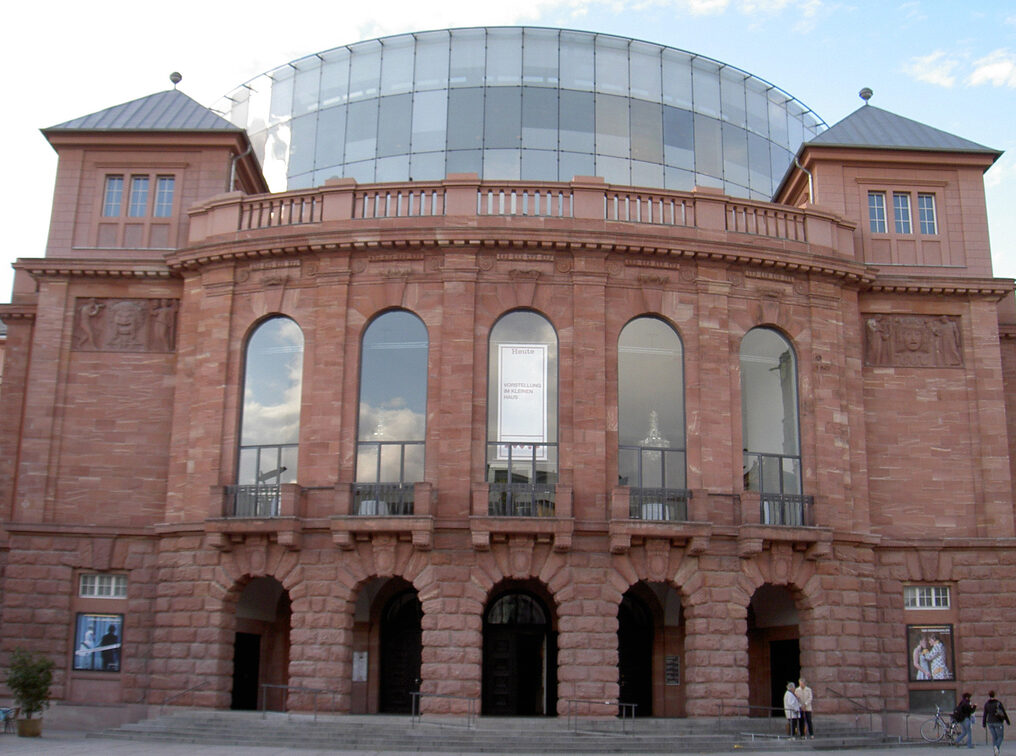
The order to build a theater in Mainz came from none other than Emperor Napoleon himself. Since 1797, the city had been back in French hands and was no longer called Mainz, but Mayence. Napoleon, who often stayed in Mainz, commissioned his architect J.F. Eustache de St. Far on October 13, 1804, to create Gutenbergplatz and build a theater on its northern edge modeled on the "Grand Imperial Theater" in St. Petersburg. The foundation stone was laid in the spring of 1809, but the historical events of the following years brought the project to a standstill.
Twenty years later, the commission to plan and build a theater was awarded once again—this time by the Mainz City Council to Georg Moller, Grand Duke of Hesse's chief architect and one of the most important builders of his time.
Construction began in 1829, and the grand opening of the "Grand Ducal National Theater Mainz," as the theater was named, took place on September 21, 1833. This made Mainz the fourth German city after Berlin, Hamburg, and Munich to have a large, prestigious theater.
Changes to the original shape
In the decades that followed, the theater building underwent repeated alterations and changes to its original design. In 1863, two boxes were added for the grand ducal court, followed by further boxes in the first tier in 1876. Electricity was installed in 1881, bringing an end to gas lighting.
Safety deficiencies and the desire to expand the building led to drastic structural measures beginning in 1909, which unfortunately resulted in the loss of the unique features of the Moller construction. In the course of these alterations, three staircases with relief images of "Comedy" and "Tragedy" by Mainz sculptor Ludwig Lipp were added after 1910.
Second World War and reconstruction
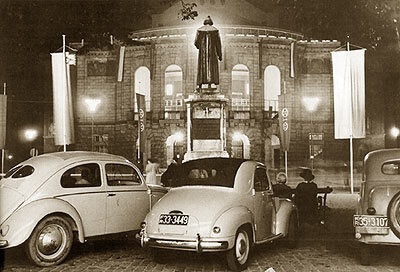
On August 12/13, 1942, the building was hit by incendiary bombs and severely damaged.
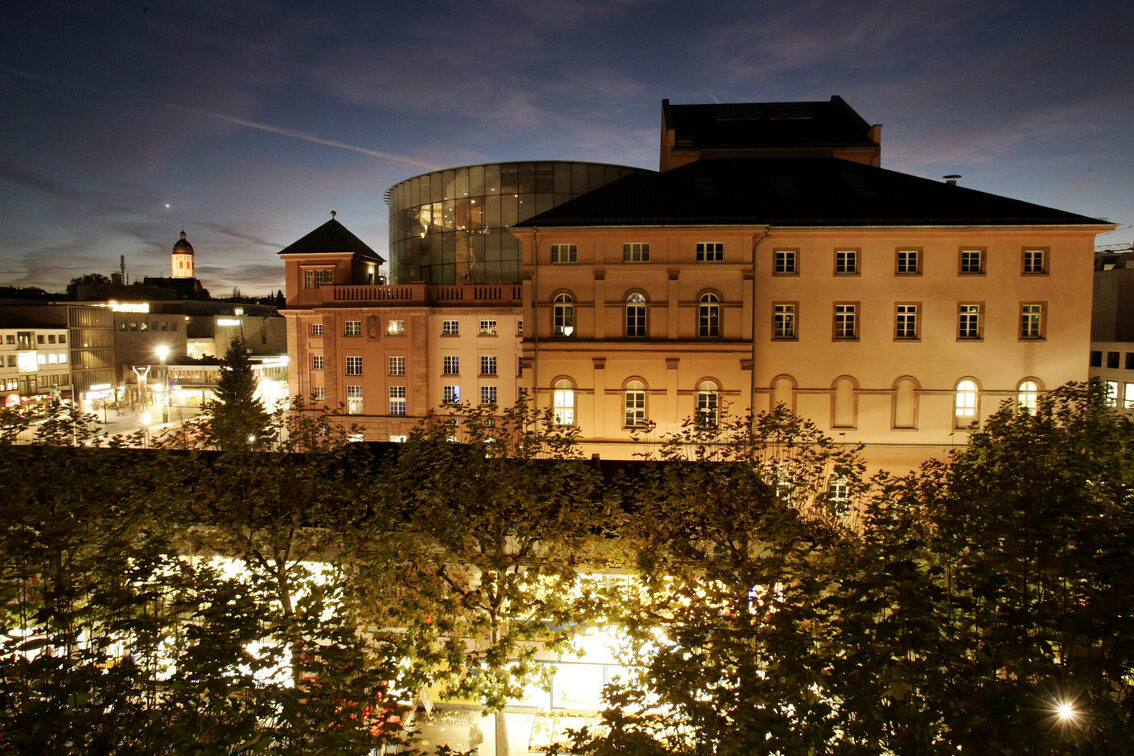
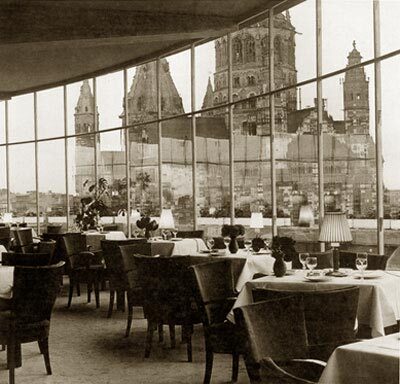
Despite limited financial resources, the theater was restored to working order after 1949 and celebrated its (re)opening on November 24, 1951, with a ballet performance by the GRAND OPERA PARIS. However, the rooftop restaurant that operated in those post-war years had to make way for an air conditioning system in 1976/77. In 1997, the theater was expanded with the addition of the new "Kleines Haus" (Small House). It is connected to the Mollerbau by two glass bridges and underground passages.
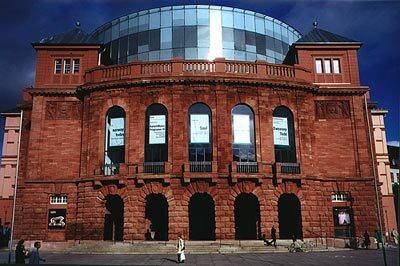
After a subsequent three-year complete renovation, which was costly and fraught with considerable difficulties, the Großes Haus resumed performances on September 14, 2001.
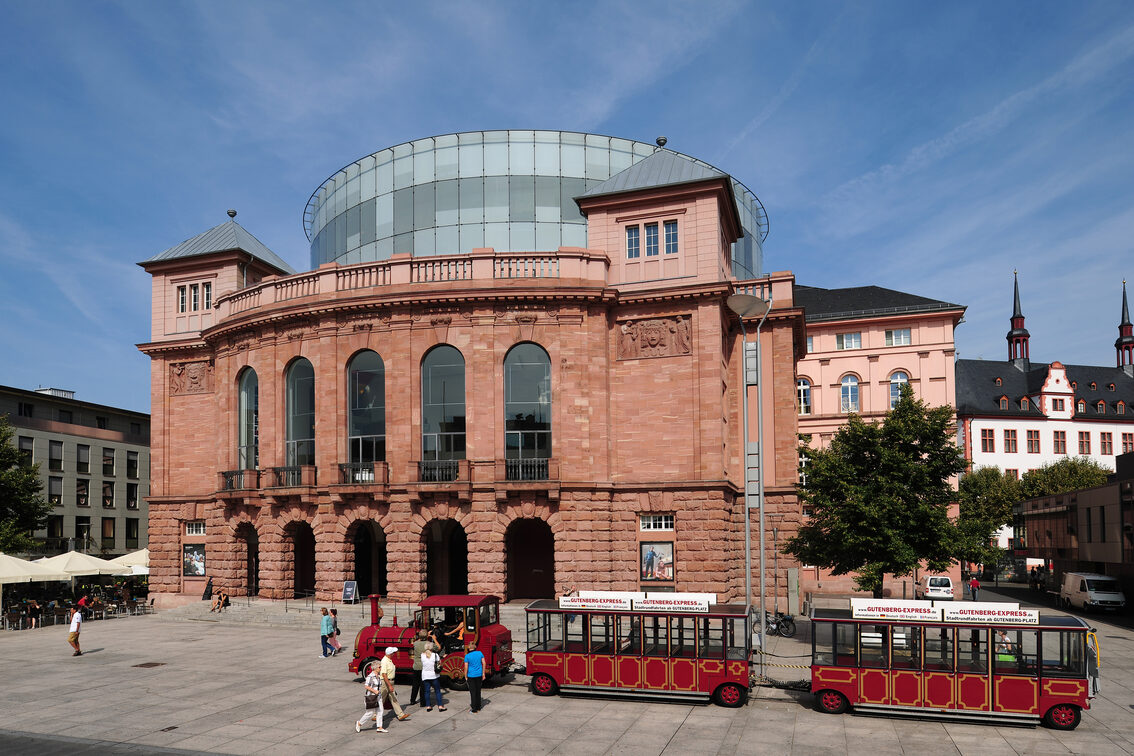
A glass dome was erected on the roof of the Großer Haus, which housed the Mollers restaurant until 2009. The dome has been converted into a studio stage and opened on September 22, 2012, under the name "Deck 3." It has since been renamed "Glashaus" (Glass House).