
Spider moth or oak processionary moth
Over the last few days, the city of Mainz has been receiving an increasing number of calls and emails from concerned citizens. The reason is white spider web-like webs on bushes and trees. Could this be the oak processionary moth?
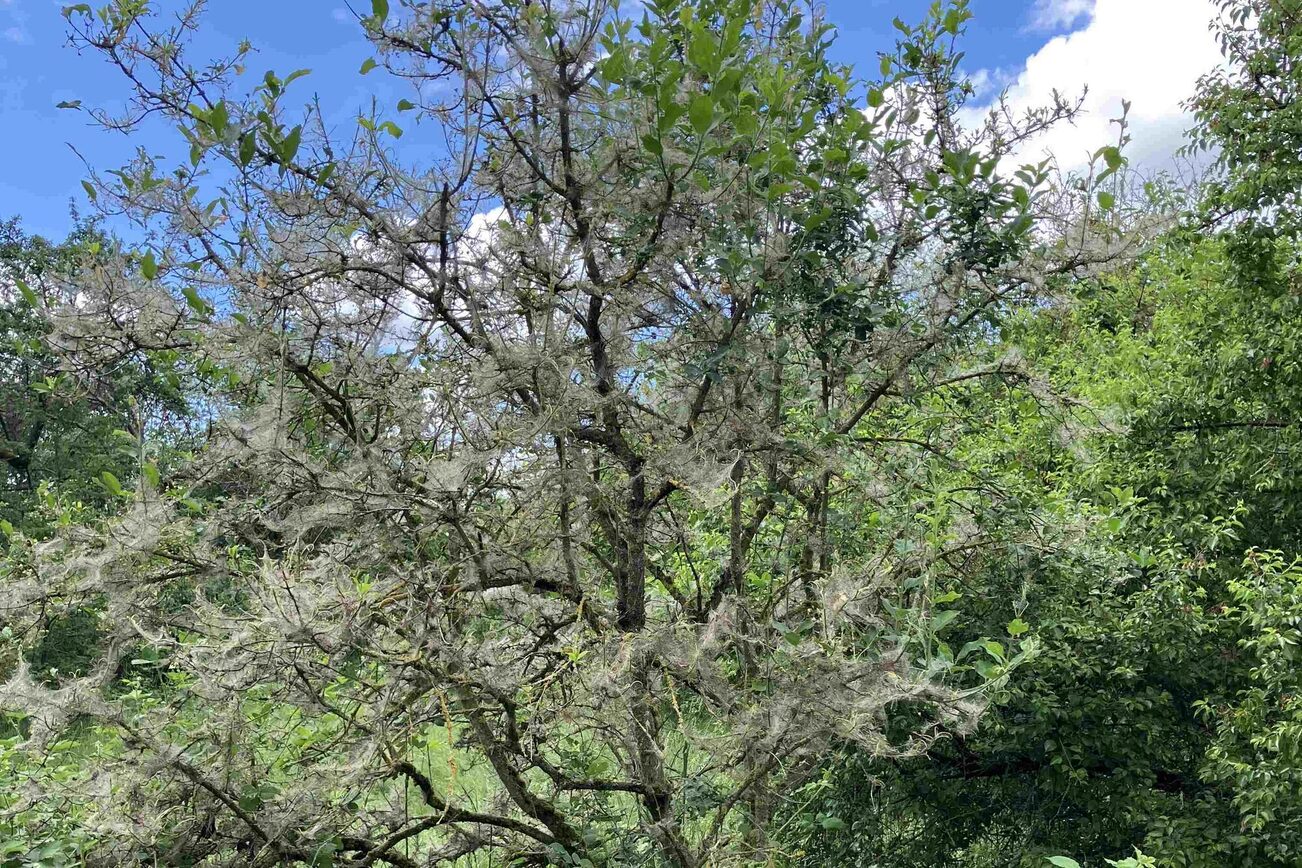
The all-clear has been given by the Parks and Environment Department: in most cases, the silvery-shiny, bare shrubs and trees in late spring are the work of gypsy moth caterpillars, which cover trunks, branches, and twigs with a web and eat everything underneath it. The webs protect the caterpillars from predators. Although it looks dangerous, it is not: unlike oak processionary moths, web moths are harmless to humans and pets. And the trees and shrubs will sprout again in summer.
Oak processionary moths
The heavily hairy caterpillars are found exclusively on oak trees, here on the trunk or the undersides of branches or forks, and form rather compact webs. Branches and even entire trees, as is the case with web moths, are not infested. Since the hairs of oak processionary caterpillars can cause severe allergic reactions, the webs are removed by specialists in accordance with special protective measures.
Web moths
Web moth species also specialize in certain trees and shrubs, and the damage is therefore limited to these. Affected tree and shrub species include spindle trees, hawthorns, blackthorns, poplars, willows, spindle trees, and fruit trees. At the end of June and beginning of July, the caterpillars pupate and transform into white moths with black spots. After mating, the eggs are laid on the trees and shrubs, where they overwinter until the following spring.
Even though web moths are not dangerous, some garden owners wonder about effective methods to prevent the sight of bare shrubs and ghostly webs. The only thing that helps here is a watchful eye in spring. Individual caterpillars and small webs can be removed in the early stages. Once the web has already formed over a large area, it becomes more difficult to combat. The use of insecticides always affects the natural enemies of web moths and should be avoided.