
Common horse chestnut
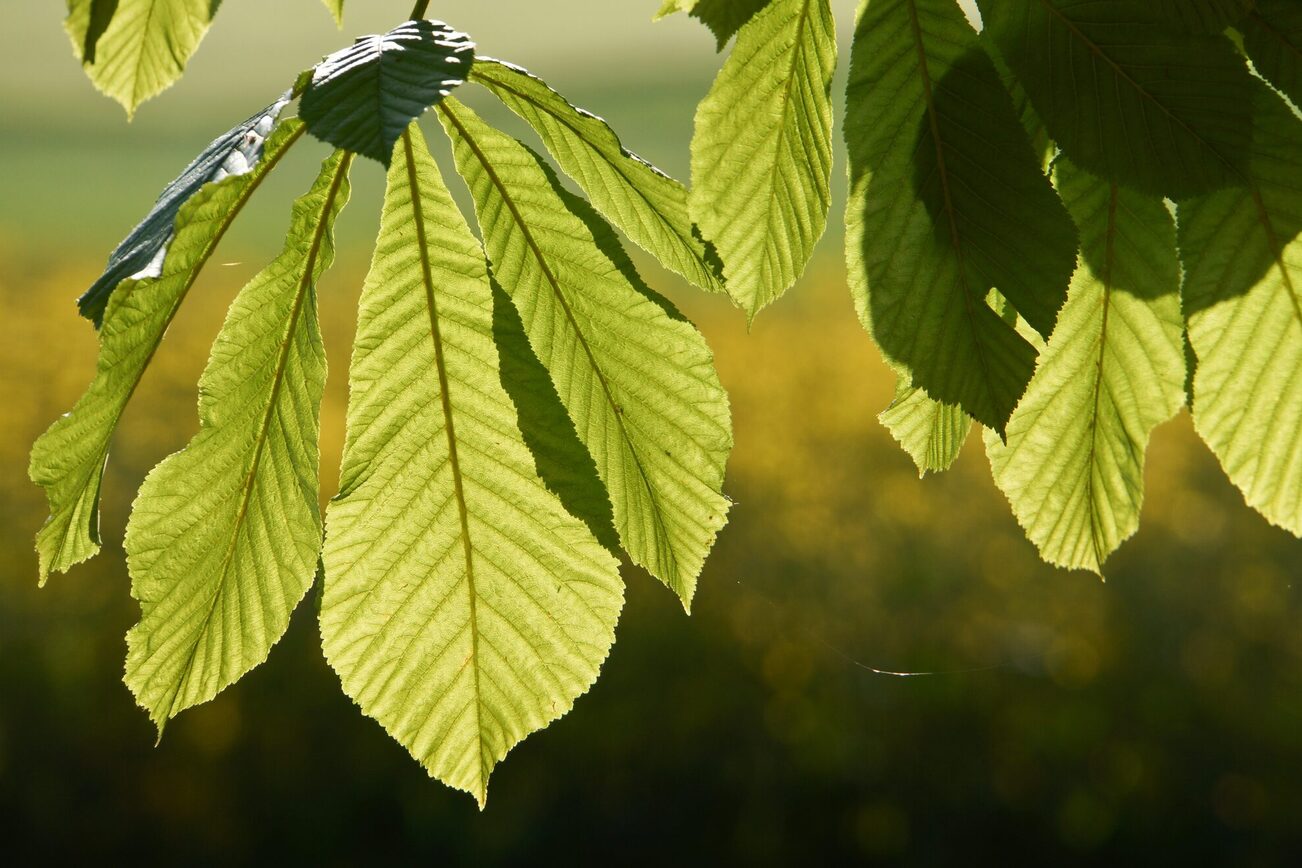
Is there any tree that blooms more beautifully and impressively than the horse chestnut? Hardly in our latitudes. Even though it is not native to this region, the common horse chestnut is probably one of the few trees that everyone knows. Its flowers and large leaves, divided into 5 to 7 segments, are so distinctive that they resemble oversized hands. The chestnut is a very fast-growing tree that can grow to an impressive size, especially as a solitary tree in parks or as a courtyard tree.
When you think of beer gardens, you also think of chestnut trees as huge shade providers. And there are probably few who do not remember the little chestnut men that were made during the autumn months.
- Origin: Balkans, Southeast Europe
- Height: 20-30 meters
- Leaves: dark green, golden yellow to orange in autumn
- Flower: May/June, white, yellow-red spotted, in upright candles
- Fruit: spiky green husk with up to 3 dark brown fruits
- Soil/location: Normal fresh soil, sunny location
- Special feature: For several years now, the horse chestnut has been severely affected by the chestnut leaf miner moth. The pest has spread at record speed across chestnut populations throughout Europe. In spring, the moth lays eggs under the leaf surface, from which larvae hatch shortly afterwards. These feed at will and later pupate. It usually takes only two to three months from egg laying to emergence, so that up to three generation cycles per year are possible in our latitudes.
In the Mainz/Wiesbaden area, the sticky, plump, and apparently very nutritious and tasty buds of the chestnut tree are at the top of the diet of ring-necked parakeets in winter. This results in stunted growth of the trees. This can be clearly seen in Biebrich Palace Park.