Southern hackberry
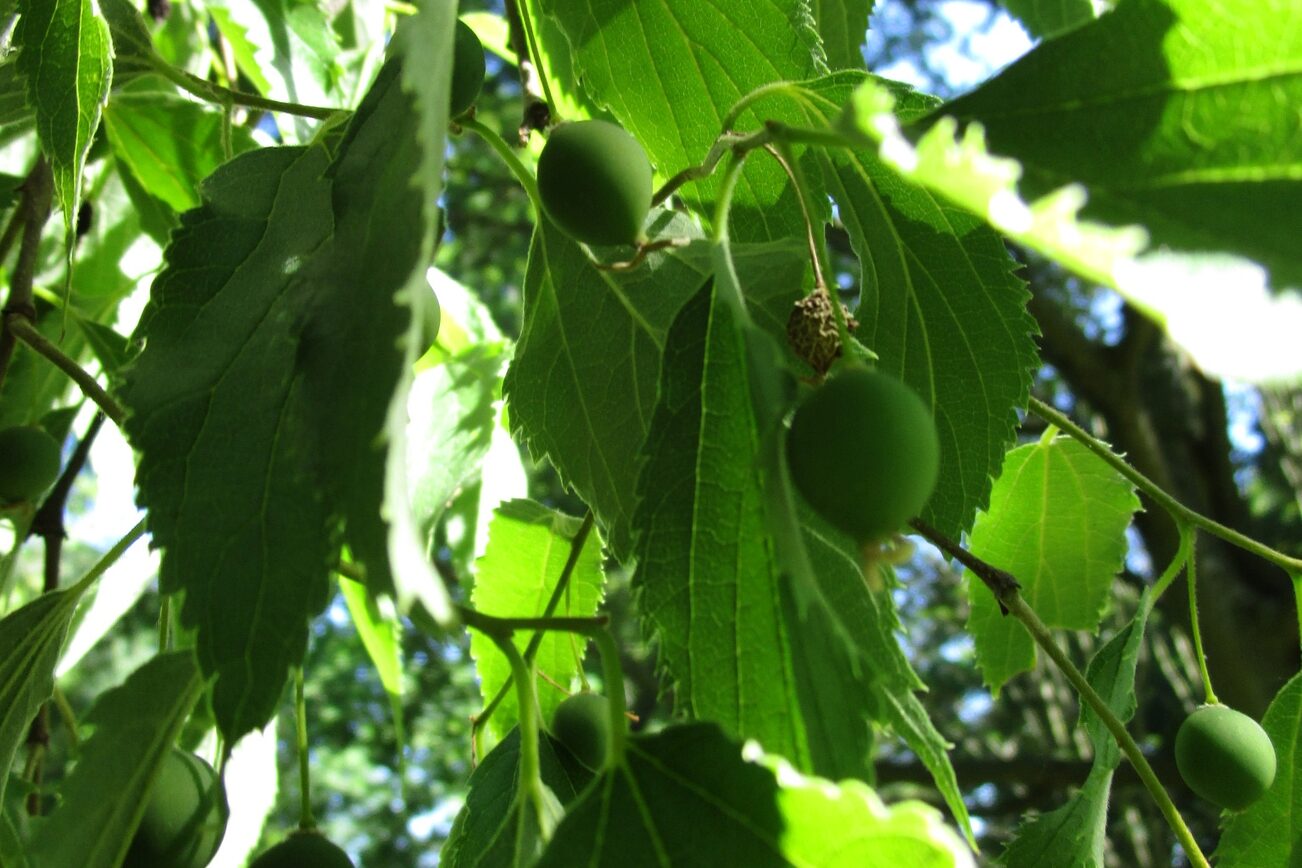
The southern hackberry, also known as the southern nettle tree, is native to the countries bordering the Mediterranean Sea. It was first cultivated north of the Alps in England in the 16th century. In our latitudes, the hackberry is suitable for use in inner-city areas and as a good, robust street tree. It stands out from other trees and shrubs due to its pronounced tolerance to heat and drought.
- Origin: Southern Europe, North Africa
- Height: 10–20 m
- Leaves: elongated elliptical; pointed; 5–12 cm long and sharply serrated; dark green and rough on top, gray-green and softly hairy underneath
- Flower: May, inconspicuous
- Fruit: ripens in autumn; 1–2 cm thick; on 3 cm long stems; spherical; edible; sweet taste
- Soil/location: no special requirements; sunny, warm; prefers deep, nutrient-rich soils
- Special feature: The tree got its colloquial name "Zürgelbaum" in South Tyrol. There, its fruits are called Zürgeln in the local dialect.