Building and planning law
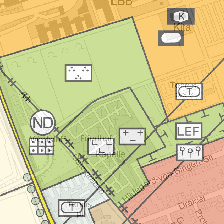
Land use plan - Effective changes to the land use plan of May 24, 2000
The amendments to the Mainz land use plan, which came into effect on May 24, 2000, can be viewed separately on the Internet. They are numbered in the order in which they were adopted and are accompanied by a map and explanatory report. Citizens, interested authorities, and planners thus have the opportunity to obtain comprehensive information on the current status of the preparatory urban land-use planning for the city of Mainz, together with the editorial update of the land-use plan.
Land use plan on the Internet
The land use plan for the city of Mainz came into effect on May 24, 2000. In addition to the completed amendment procedures, numerous editorial corrections have since been made to the presentations and informational entries based on current laws and resolutions on planning objectives. Until now, only the amendments could be viewed on the Internet, but not the entire plan. The editorially updated land use plan on the Internet completes the information offered by the urban planning department of the state capital Mainz for citizens as well as interested authorities and planners.
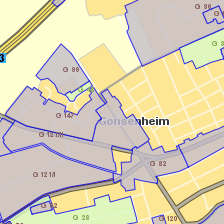
Development plans on the Internet
As the state capital of Mainz wishes to provide as comprehensive and citizen-friendly information as possible about building and planning law, it makes the legally binding development plans of the city planning office available for research on the Internet. This service includes both older plans in analog form and new plans created digitally. The digital plans, including the textual specifications and justifications, can be viewed directly on screen.
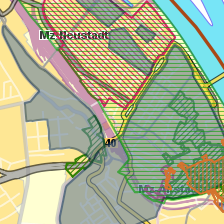
Planning-relevant statutes on the Internet
In addition to zoning plans, other local regulations are also relevant for planning and construction. Planning-related statutes can now also be researched online. These include internal area statutes, preservation statutes, design statutes, and statutes on redevelopment areas. For these types of plans, you will find overviews of the location and scope of application as well as factual information for individual plans in the map section of the website. The Mainz city administration will continuously expand the information on planning and construction.
Change locks
The moratorium on changes is a tool for safeguarding urban land-use planning and is regulated in Sections 14 et seq. of the German Building Code (BauGB). By enacting a bylaw establishing a moratorium on changes, the municipality can implement its vision for the urban development of the area. During the period of validity of the moratorium on changes, building rights may generally not be exercised. Pursuant to Section 14(2) of the BauGB, an exception to the moratorium on changes may be granted if there are no overriding public interests that would preclude it. The moratorium is valid for two years from the date the ordinance takes effect. The period that has elapsed since the notification of the first postponement of a building application pursuant to Section 15(1) of the BauGB shall be credited toward the two-year period (Section 17(1) of the BauGB). After the two-year period has expired, the municipality may extend the period by one year, and again by another year after that year has expired. The resolution regarding the moratorium on changes, as well as the resolution regarding the extension of the moratorium, will be published in the Amtsblatt of the City of Mainz.
Informal urban development planning
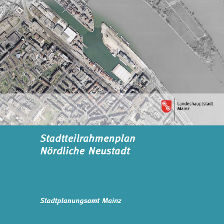
In addition to the formal planning procedures listed in the Building Code, such as urban land-use planning, informal urban planning procedures, such as urban development framework plans, master plans, etc., are of great practical importance in planning practice. They serve to prepare, support, or coordinate formal urban land-use planning.
Cancellation statutes
This page lists the repealed development plans of the city of Mainz in accordance with the provisions of Section 10a (2) and Section 1 (8) of the German Building Code (BauGB).
Family-friendliness check in the urban land-use planning of the state capital Mainz
The state capital of Mainz has developed a family-friendliness assessment, which was introduced as a procedure in urban land-use planning by a city council resolution. In the future, the family-friendliness assessment is to be carried out for all urban development measures with a high potential impact, so that issues of social compatibility and family-friendliness are taken into account in important planning processes.