Blog Winery Paulinenhof
Wine tourism can also be sustainable
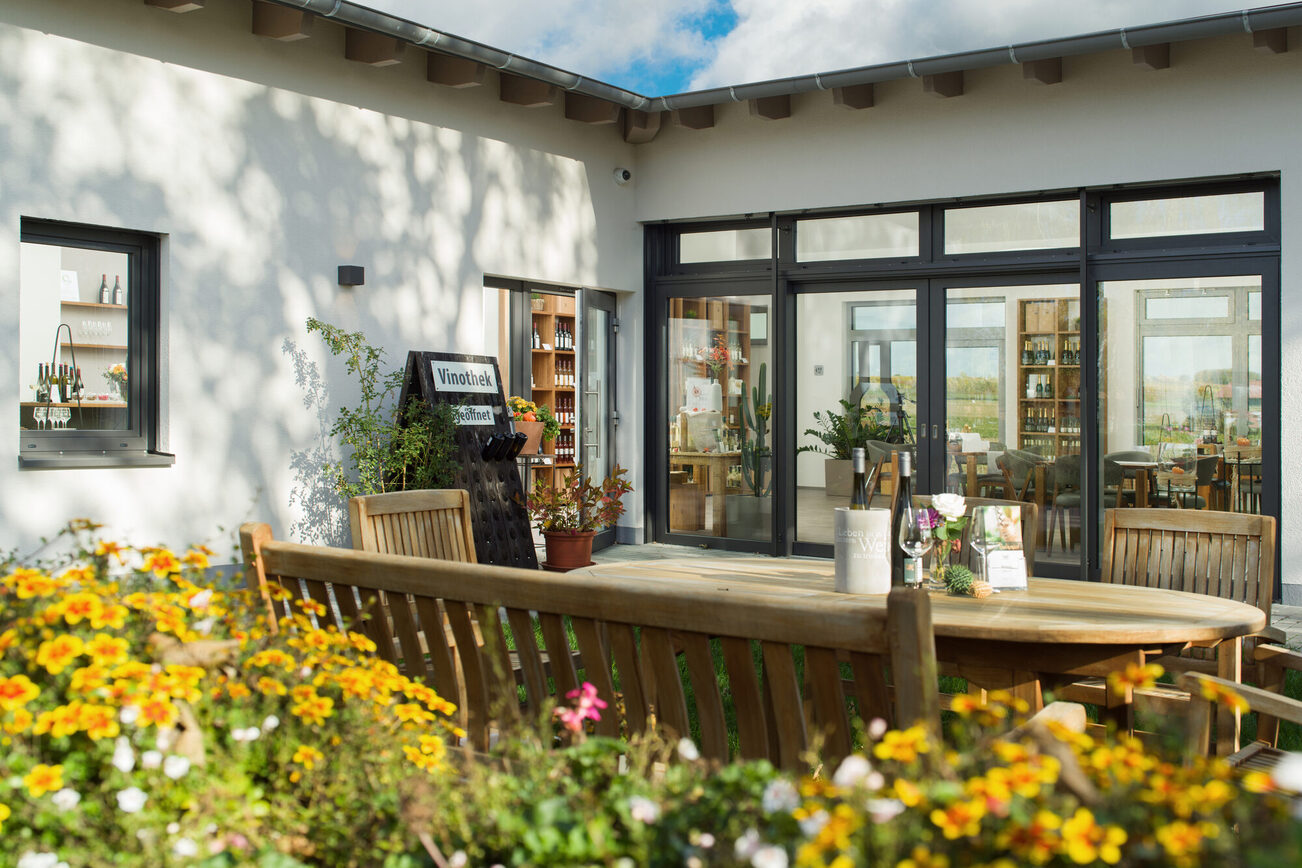
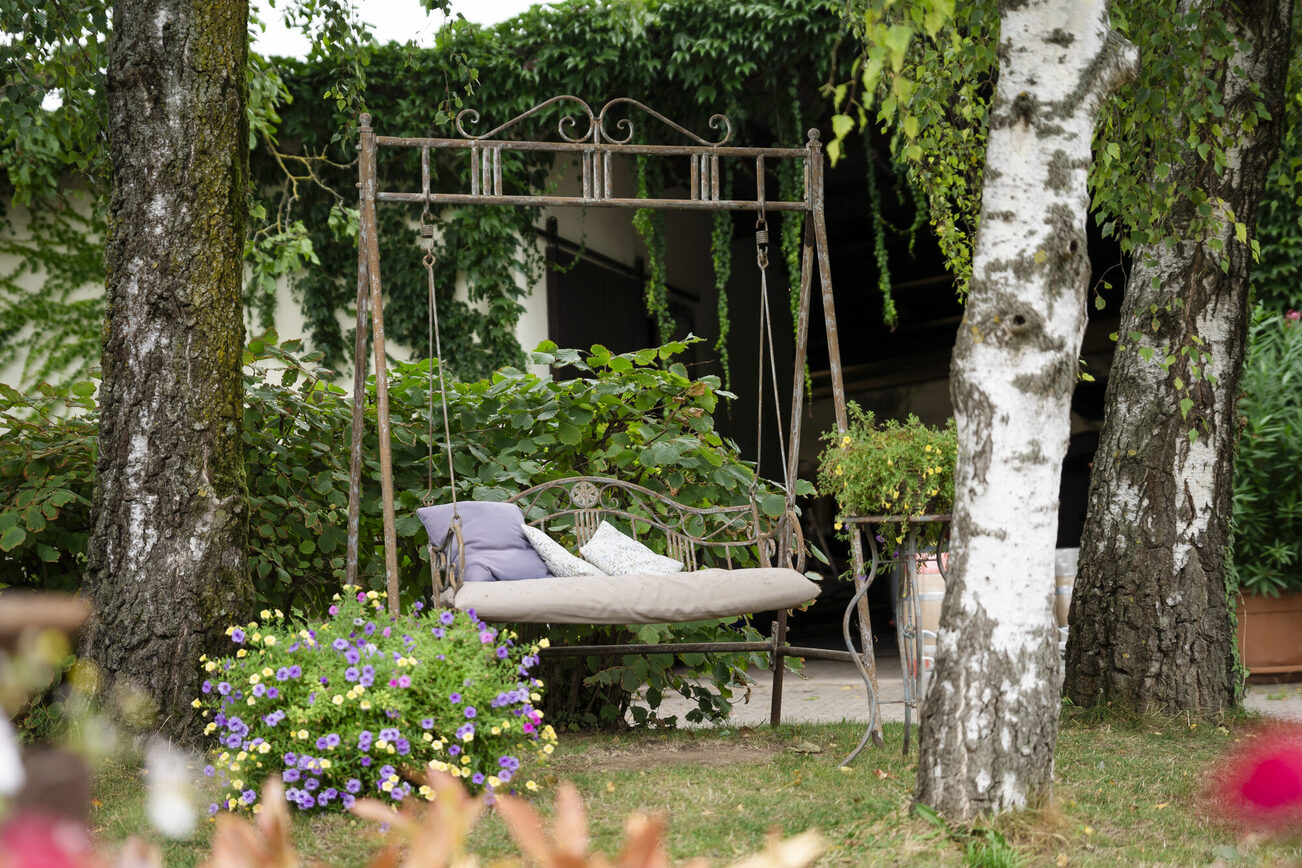
Visitors to Paulinenhof in Selzen, Rheinhessen, experience sustainability right from the moment they arrive: during a champagne reception in the blossoming garden, wine lovers enjoy sparkling wine in natural surroundings filled with enticing aromas. The attractive grounds delight visitors with many small alcoves and cozy corners – it feels like a "green living room."
The wine shop and the garden form a single entity: in the wine shop, the view of the greenery is fascinating, while from the outside, visitors can see the wine bottles. "The whole family is fond of gardening – but the mastermind behind the planting is my mother, Ina!" explains master oenologist Tim Bernhard.
A sustainable family winery
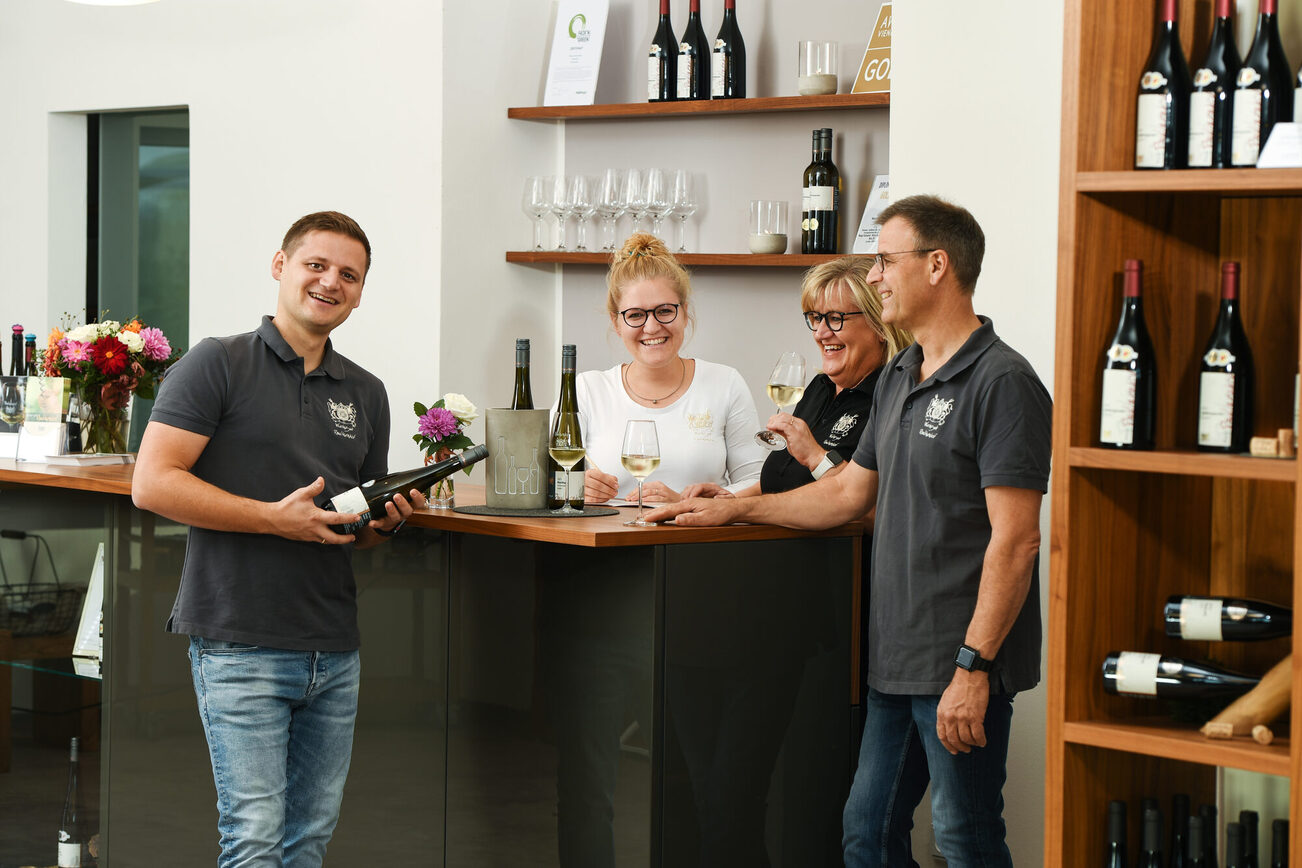
This traditional family business has been growing grapes since 1762, with clearly defined roles: winemaker and manager Rolf Bernhard looks after the vineyards, his son Tim is the cellar master, his wife Silja and brother-in-law Halit help out at the winery alongside their jobs at the Ministry of Agriculture and the Department of Transportation, while mother Ina and daughter Pauline take care of the wine shop and events. "For us, the focus is on the experience of the winery," they say.
At this Fair'n Green-certified winery, sustainability is not limited to climate-adapted planting in the garden—the concept encompasses all areas of winegrowing. Tim's credo is: "For me, sustainability means deciding in every single situation which solution is the most environmentally friendly!" Thanks to the photovoltaic system, more than 90% of the energy required for the grape harvest is covered by solar energy. The winery puts a lot of effort into storing rainwater – a resource that is becoming increasingly precious in the face of climate change. In the vineyard, the Bernhards pay attention to diversity between the rows of vines and do not use glyphosate at all.
Exotic grape varieties also in the program
In addition to the classic grape varieties Riesling, Silvaner, and the Burgundy varieties, Tim enjoys experimenting with unusual grape varieties: He brought the Chenin Blanc grape variety back with him from his time in South Africa—an exotic variety in Rheinhessen, but perhaps a viable option in the face of climate change. In a blend with Chardonnay, this opulent white wine offers a fascinating taste experience with international characteristics.
“Terz” is not only the name for a musical interval but also for the flagship cuvée of this Rheinhessen winery, made from Sauvignon Blanc, Chardonnay, and Gewürztraminer (!). An incredibly complex flavor—a wine that invites deep philosophical reflection—is what makes it so convivial. A wine that’s right up Tim Bernhard’s alley.

Viticulture in the future
Currently, the creative cellar master is working on dry, non-alcoholic grape juice and the winery’s own version of a non-alcoholic secco.
Together with a small group of like-minded winemakers, Tim is also working on a research project funded by the Federal Ministry of Agriculture. They are studying humus formation and carbon sequestration in the vineyard. “We’re not resting on our laurels!” is their motto.
The Great Wine Capitals Best of Wine Tourism Award 2025 in the “Sustainability in Wine Tourism” category goes to the innovative Paulinenhof winery. The jury was impressed by how sustainability is integrated into every aspect of the winery’s operations.
About the blogger
Wolfgang Junglas, a TV and wine journalist, works in the entertainment department at SWR Television in Mainz, where he produces programs such as “Election of the German Wine Queen.” He is an author, chairman of Weinfeder eV, president of FIJEV, and an adjunct lecturer at Geisenheim University—and, since 2021, the blogger for GWC Mainz | Rheinhessen.